
Look out of the window mid-flight and the world below seems impossibly small. The captain’s announcement often mentions a cruising height of around 35,000 feet, and most of us nod and go back to our film. But have you ever wondered why planes fly at 35,000 feet and not lower, where the view is better, or higher, where the air is smoother? The answer is a clever balance between efficiency, safety and comfort.
Thin Air Means Less Drag
An aircraft has to push through the air, and the thicker the air, the harder that push. NASA’s drag equation shows that drag rises in direct proportion to air density. At high altitude the air is much thinner, so the plane meets less resistance at the same speed and can travel further on the same amount of fuel.
Jet Engines Like to Go Fast
NASA notes that jet engines are at their most efficient at high speeds, above roughly 500 miles per hour, while propellers do better below that. Airliners are built for speed over long distances, so cruising where the air is thin and the speed is high suits them well.
But Not Too High
Thin air is a trade-off. It also gives the wings less lift and the engines less to work with, so climbing too high eats up the benefit. That is why 35,000 feet is better thought of as a sweet spot rather than a magic number.
Above Most of the Weather
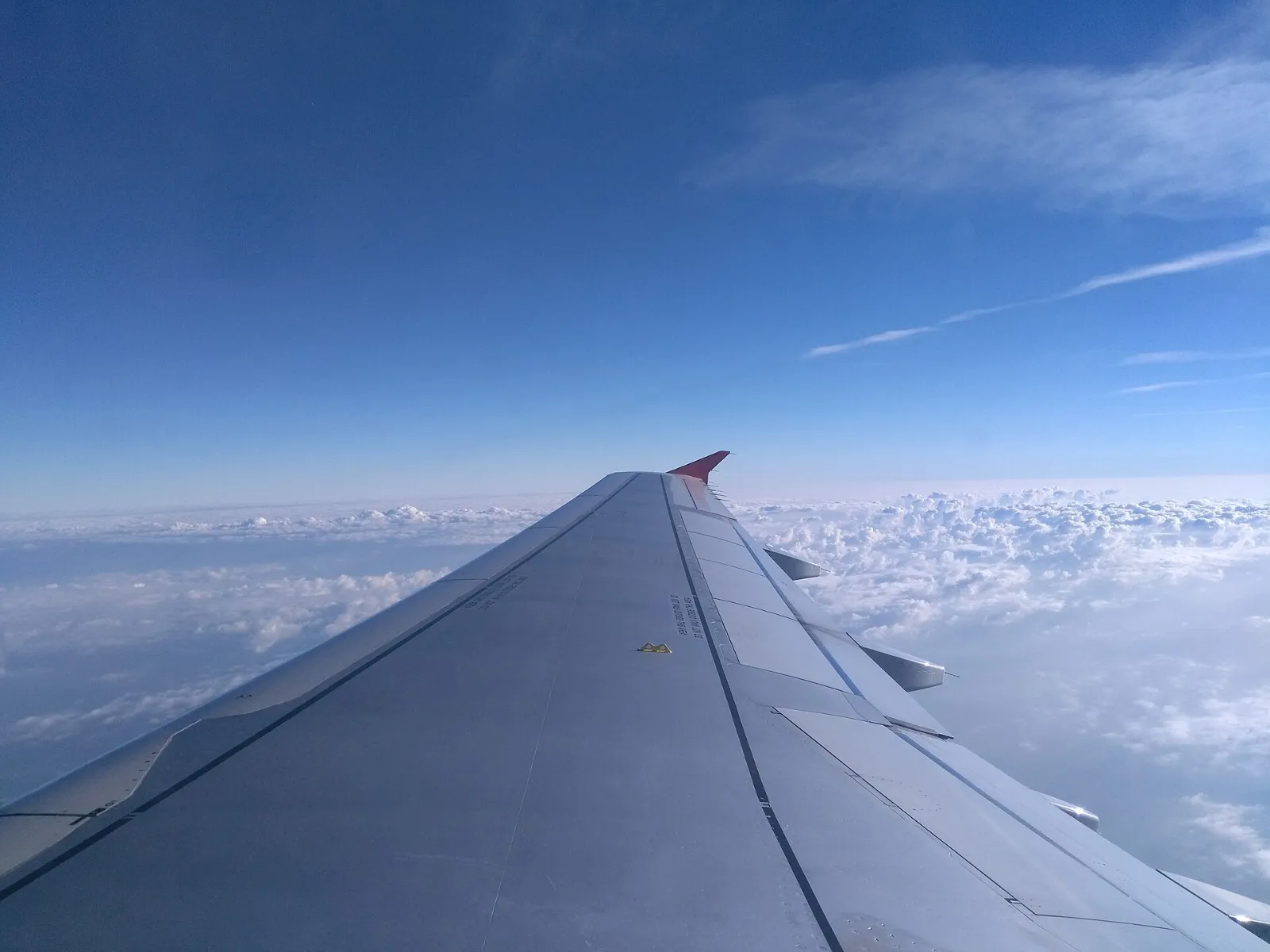
Most clouds and storms live in the lowest layer of the atmosphere, called the troposphere. According to the FAA’s pilot handbook, the vast majority of weather happens there, while the layer above it is far calmer. Flying near the top of the troposphere helps crews avoid many of the bumps that would shake a lower flight.
It is not a guarantee of smoothness, though. Jet streams sit close to those altitudes and can still bring patches of clear-air turbulence, which is why the seat belt sign sometimes comes on under a perfectly blue sky.
Why Not Fly Even Higher?
If thin air is so helpful, why not climb to 50,000 feet? There are two big limits.
The Strength of the Cabin
SKYbrary explains that the maximum certified altitude is usually set by how much pressure difference the fuselage can safely handle between the cabin and the thin air outside. Go higher and the structure must be stronger and heavier.
The Narrow Window for Speed
Pilots sometimes talk about a so-called coffin corner. In plain language, as a plane climbs, the slowest speed it can fly without losing lift goes up, while the fastest speed it can fly before airflow gets problematic near the speed of sound goes down. At very great height, the two get uncomfortably close. Airliners are designed and operated to stay comfortably away from that edge.
How the Best Height Changes During a Flight
A heavy plane full of fuel at the start of a long trip cannot climb as high as it can later on. As fuel burns off and the aircraft gets lighter, its best altitude rises. On long flights, crews therefore often climb in steps, which is something you may notice as a gentle change in engine sound and a slight climb many hours into a journey.
What Does ‘Flight Level 350’ Mean?
Pilots usually refer to height as a flight level. Flight level 350 simply means a nominal 35,000 feet, measured with the altimeter set to a standard pressure setting so that every aircraft uses the same reference. That shared language keeps planes neatly separated.
Heading East or West
In many parts of the world, planes travelling in opposite directions are kept on different levels, with odd levels generally used for eastbound traffic and even levels for westbound. Air traffic control decides the exact assignment each time, so it is a general pattern rather than a fixed rule.
Your Cabin Is Not at 35,000 Feet
Here is some comfort. Even though the aircraft is high, the cabin is pressurised to feel much lower. The rules require the cabin altitude not to exceed 8,000 feet in normal operation, so you feel as if you are on a mountain top, not at the top of the sky. Some newer aircraft are reported to hold the cabin lower, but check your airline’s own information if that matters to you.
What If Pressure Is Lost?
In the unlikely event of a pressure problem, oxygen masks drop down. Above 25,000 feet, regulations require passengers to have oxygen available for the descent. At cruising height, the time you could stay alert without extra oxygen is very short, which is why crews are trained to descend quickly and why you should put your own mask on first.
Frequently Asked Questions
Is 35,000 feet the same for every flight?
No. Typical airliner cruise heights range roughly from the low 30,000s to the low 40,000s of feet, depending on the aircraft, its weight, the weather and air traffic.
Does flying higher make a flight smoother?
Often, because most weather is lower down, but jet streams and clear-air turbulence can still cause bumps near cruising height.
Why does my plane climb during a long flight?
As the aircraft burns fuel it becomes lighter, and a lighter plane can efficiently fly higher, so crews often move up in steps.
Final Thoughts
The next time you look out over a sea of clouds and think about how far below the ground is, remember that this height is no accident. It is a careful compromise that lets the plane use less fuel, avoid most weather and keep you comfortable inside. Understanding it makes the quiet hum of cruise feel a little more reassuring, and a little more wondrous too.