
You settle into your seat, the engines roar, the plane climbs, and then it happens: a dull fullness in your ears, followed by a little crackle or pop. For many passengers it is a small flying ritual. For others, especially children, it can be uncomfortable enough to bring tears. The good news is that it is completely normal, and a few simple habits can make it far easier.
What Is Actually Happening Inside Your Ears
Behind each eardrum is a small air-filled space called the middle ear. A narrow passage known as the Eustachian tube connects it to the back of your throat. Its job is to let air in and out so that the pressure behind your eardrum matches the pressure around you.
Most of the time this happens quietly without you noticing. During a flight, though, the air pressure around you changes quickly as the plane climbs and descends. If the tube cannot adjust fast enough, your eardrum is pushed or pulled slightly, and you feel that blocked, muffled sensation. The “pop” is the moment a little air finally moves through the tube and the pressure evens out.
Why Cabin Pressure Changes During a Flight
Airliners cruise very high, often somewhere between 35,000 and 42,000 feet, where the outside air is far too thin to breathe comfortably. To keep everyone safe, the cabin is pressurised. However, it is not pressurised to the level you feel on the ground. Making an aircraft strong enough to hold full sea-level pressure would add a great deal of weight, so airlines accept a compromise.
Cabin altitude: the number behind the feeling
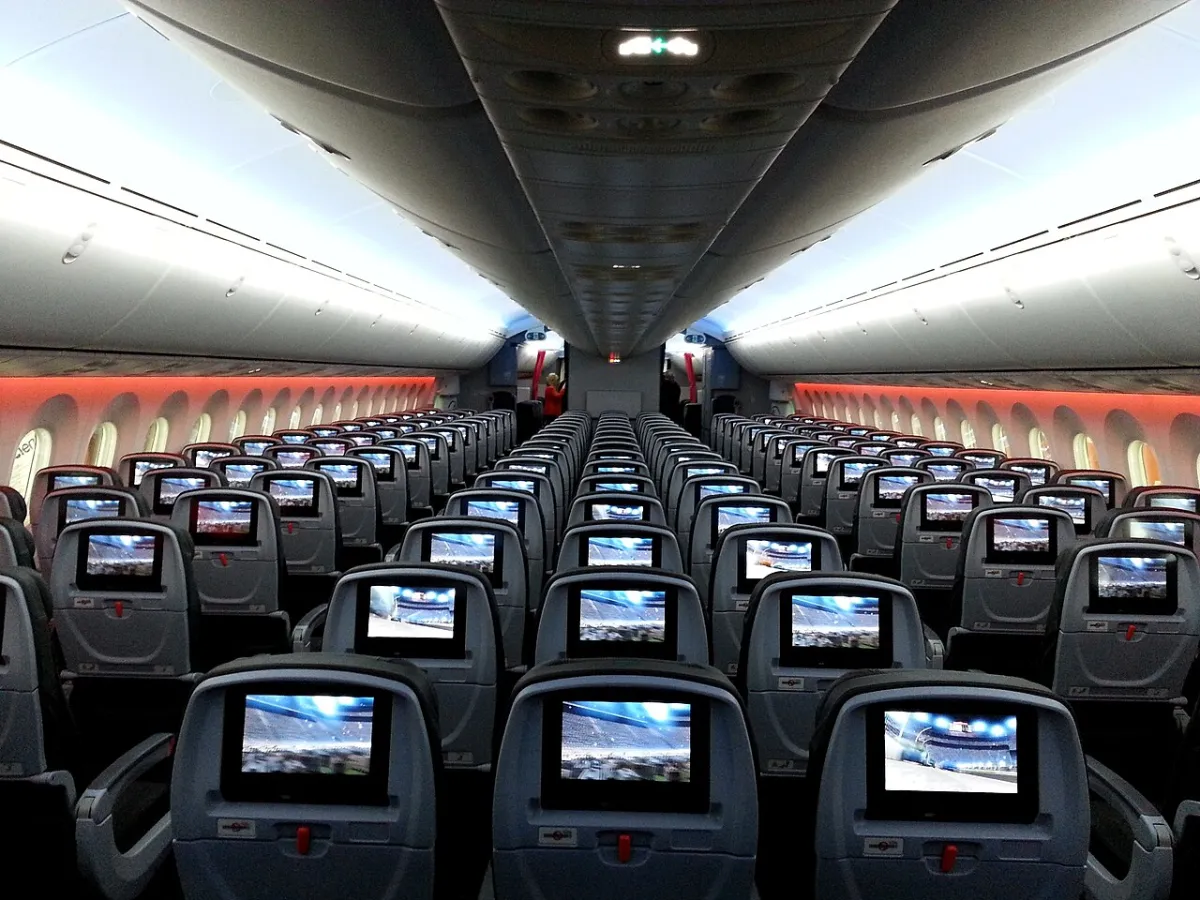
Inside most jets, the air pressure is similar to being at about 6,000 to 8,000 feet above sea level, with 8,000 feet being the normal upper limit. Some newer aircraft, such as the Boeing 787, aim for a lower cabin altitude of around 6,000 feet, which many travellers find a little kinder on the body.
Why takeoff and landing feel the most
Your ears are most noticeably challenged when the pressure is changing fastest. That means the climb after takeoff, when cabin pressure is gradually reduced, and the descent into your destination, when it rises again. Many people find the descent harder, because it can be trickier to let air back into the middle ear than to let it out.
Who Struggles Most With Ear Pressure
Anyone can feel it, but some travellers are more likely to have trouble. A cold, a blocked nose, hay fever or a sinus infection can swell the lining of the Eustachian tube and make it harder to open. Babies and toddlers are also more prone to discomfort because their tubes are naturally smaller. And if you fall asleep during descent, you stop swallowing and yawning, which are the very actions that help the tube open.
In more severe cases, often called airplane ear, symptoms can include sharp pain, muffled hearing, ringing, dizziness or even a little bleeding from the ear. Mild discomfort usually fades quickly after landing. If fullness or muffled hearing lasts more than a few days, or the symptoms are severe, it is sensible to see a doctor.
Simple Ways to Help Your Ears
For adults
- Keep swallowing and yawning during climb and descent. Sipping water, sucking a sweet or chewing gum all encourage you to swallow.
- Try a gentle Valsalva manoeuvre: pinch your nostrils, close your mouth and blow softly. Never force it hard.
- Stay awake as the plane descends so you can keep doing these things.
- Consider filtered earplugs designed for flying, which slow pressure changes, though you still need to swallow and yawn.
- If you are congested or have allergies, talk to a pharmacist or doctor beforehand about nasal sprays or other options. Some decongestants are unsuitable for people with heart conditions, high blood pressure or pregnancy, so check first.
For babies and children
- Offer a bottle, breast or pacifier during takeoff and landing, because sucking makes babies swallow. Keep little ones upright while they drink.
- Children older than about four can chew gum or sip through a straw.
- Decongestants are not recommended for young children, so speak to a paediatrician if your child has a cold before you fly.
Should You Fly With a Cold?
If you can reasonably avoid it, a heavy cold, sinus infection or ear infection is a good reason to think twice. Blocked passages make it much harder for pressure to equalise. If you cannot change your plans, check with a doctor or pharmacist in advance, and ask about your own situation, especially if you have recently had ear surgery.
Other Cabin Effects You Might Notice
Ears are not the only part of you that notices the thinner air. At typical cabin altitude, oxygen levels in the blood dip slightly, which is harmless for most healthy adults but can add to tiredness. The air is also very dry, so drinking water regularly helps. Gas in your stomach expands a little, which can make you feel bloated, and food can taste blander than it does at home, one reason airline meals are often seasoned more boldly.
Frequently Asked Questions
Is it dangerous when my ears do not pop?
Usually not. Blocked or muffled ears during a flight are common and generally clear on their own soon after landing. Get medical advice if the feeling lasts for days, or if you have severe pain, dizziness or hearing loss.
Why do my ears hurt more when the plane lands?
During descent the cabin pressure rises, and it can be harder to let air back into the middle ear through a narrow tube. This is why swallowing, yawning and staying awake matter most before landing.
Can I use earplugs on a plane?
Yes. Specialised filtered earplugs can help slow pressure changes at the eardrum. They are not a cure, so keep swallowing and yawning as well.
Final Thoughts
That small pop in your ears is a reminder of the clever engineering keeping you comfortable seven or eight miles above the ground. A little preparation, a few swallows and a calm descent are usually all it takes to make it a non-event. If you travel with children or a cold, plan ahead, and enjoy the view as the clouds slide past your window.