
You settle into your seat, the tray table clicks down, and the meal you were quietly looking forward to arrives. One bite later, something feels off. The flavour is flatter, the salt is hardly there, and you wonder whether the airline simply cooked it badly. In many cases the cook is not the culprit at all. The truth is that airplane food tastes different because you are eating it in a very unusual place, and your senses behave differently up there.
This guide explains what happens to your taste buds in the sky, what airlines do about it, and a few easy ways to enjoy your next in-flight meal more.
Your Senses Change at Altitude
Taste is not just about your tongue. Most of what we call flavour comes from smell, and smell depends on the lining of your nose staying moist. A cabin at cruising altitude is a surprisingly harsh environment for both senses.
Dry Air Dulls Your Nose
Aircraft cabins are kept quite dry compared with the air at ground level. Reports on the subject explain that this dryness dries out the lining of the nose, which weakens your sense of smell, and a weaker sense of smell means weaker flavour. Many travellers describe the feeling as similar to eating with a mild cold. I could not find a reliable single humidity figure across the sources I read, so it is best to simply think of it as drier than most places you eat in.
Lower Cabin Pressure Matters Too
Cabins are pressurised, but not to sea-level pressure. German researchers who studied this tested food at ground level and in a cabin set to the equivalent of roughly 8,000 feet, and found that the combination of lower pressure and dry air reduced how strongly people perceived taste. Research from the Fraunhofer Institute for Building Physics, carried out with Lufthansa and its catering company LSG Sky Chefs, points to the same story: salt is perceived as noticeably weaker, and sweetness fades as well. The figures reported for salt are roughly a fifth to a third weaker, and for sugar somewhat less, although different write-ups give slightly different numbers, so treat them as a rough guide rather than an exact measurement.
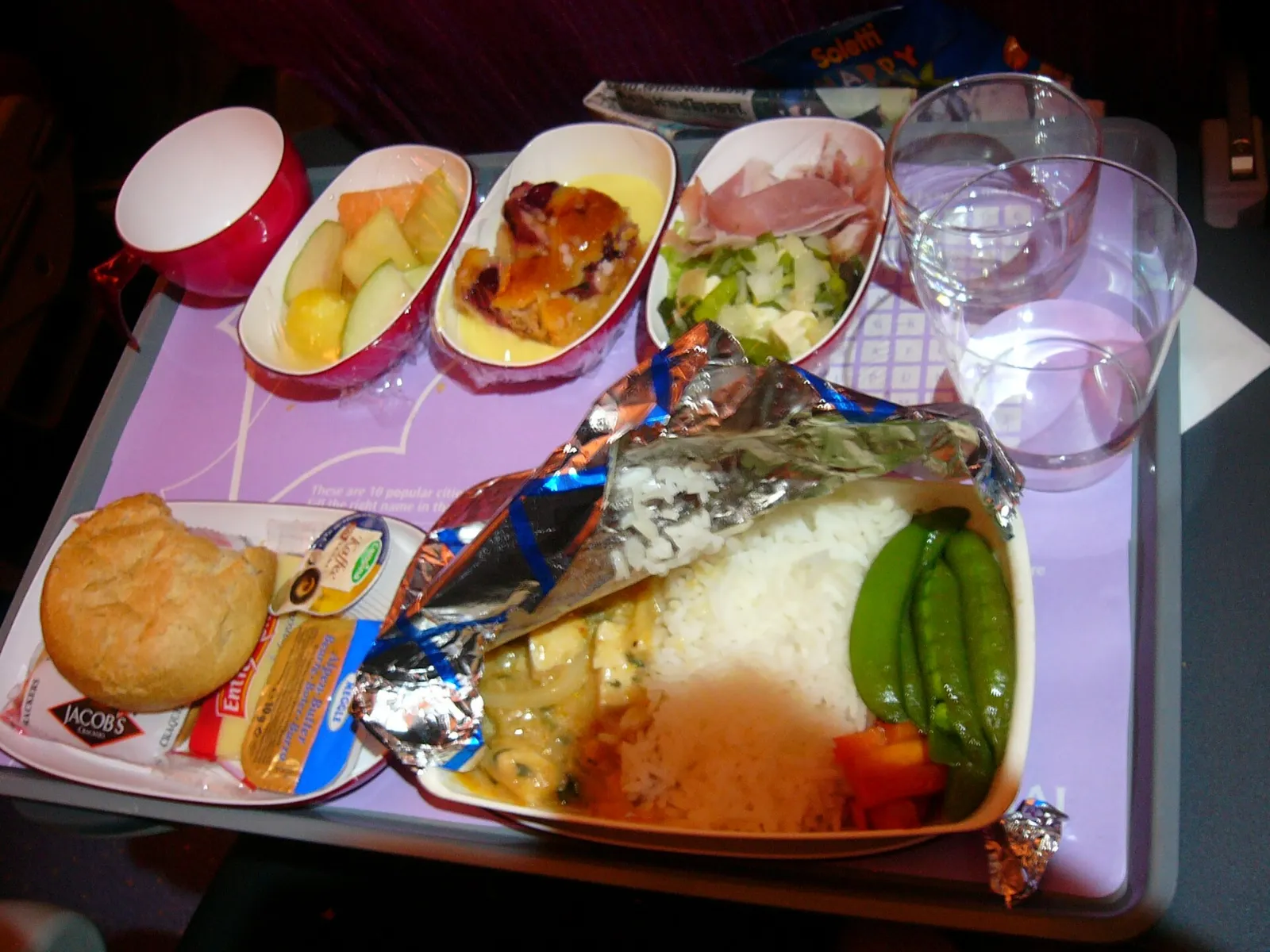
The Surprising Role of Engine Noise
Here is the part that surprises most people: noise changes taste as well. In a study from Cornell University, reported by Time, volunteers tasted simple solutions first in silence and then while listening to about 85 decibels of jet-engine-style noise through headphones. In the noisy condition, sweetness was perceived as weaker while savoury, umami flavours came across stronger. Salty, sour and bitter tastes changed much less.
So on a real flight you have a double effect. Dry air and low pressure mute many flavours, while the constant hum of the engines nudges sweetness down and savoury notes up. Together, they explain why a dessert can taste oddly bland while a rich, savoury dish can still come through.
Why Tomato Juice Suddenly Tastes Great
If you have ever watched a neighbour order tomato juice, a drink they would never touch on the ground, you have seen this science at work. Reporting based on the New York Times describes tomato juice as tasting far less acidic at altitude, and Time says the cabin conditions bring out its savoury character. That fits with the noise research, since umami is the very taste that seems to hold up, or even strengthen, in the air. Fraunhofer’s work also mentions tomato essence as a natural flavour booster in menus. It is a lovely small example of how a plain drink can feel like a treat at 35,000 feet.
What Airlines Do About It
Airlines know their passengers are tasting through a handicap, so many adjust recipes. The Fraunhofer project for Lufthansa and LSG Sky Chefs tested menus repeatedly in a flight lab in Holzkirchen, comparing a neutral version of each dish with versions that were more heavily seasoned. The idea was to find out what really works for passengers in the air, not in a test kitchen.
Bolder Seasoning, Smarter Ingredients
The research suggests that dishes with intense aromas, such as strongly spiced cuisines, stand up well to low pressure, while milder foods such as fish or poultry benefit from extra salt and herbs. Natural flavour boosters like seasoning oils and tomato essence were among the tools tested. A chef from LSG Sky Chefs has also suggested using ingredients high in umami to lift the other flavours in a dish. Another reported trick is serving fuller-bodied wines, because a very light wine can taste thin in the cabin.
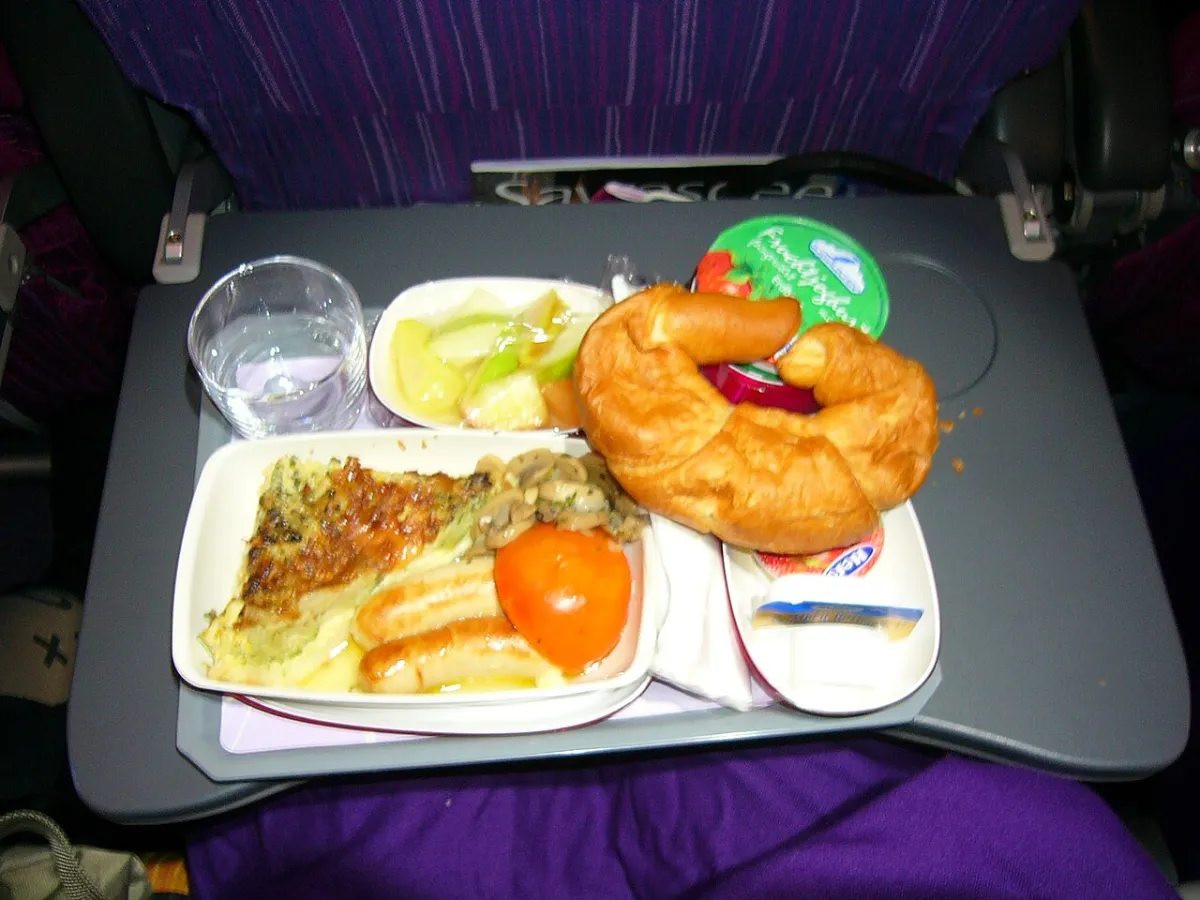
How to Enjoy Your In-Flight Meal More
You cannot change the cabin, but you can work with it. These small habits can help.
Drink Water and Stay Hydrated
Because dry air affects your nose, sipping water regularly may help you taste a little better. It also makes a long flight more comfortable in general.
Do Not Judge Dishes Too Harshly
If a meal tastes bland, remember that the setting is part of the reason. A dish that seems underseasoned in the air might taste perfectly balanced on the ground. Savoury, well-spiced dishes tend to survive the journey better than delicate ones.
Pack a Small Flavour Helper
Some travellers bring a small sachet of their favourite seasoning or a favourite snack for long journeys. Check your airline’s and destination’s rules about carrying food before you do, as they differ from place to place.
Frequently Asked Questions
Is airplane food really worse, or does it just taste that way?
Both can be true, but the environment plays a major role. Dry air, lower cabin pressure and engine noise all change how flavours reach you, so even a well-made dish can taste muted.
Why do people order tomato juice on planes?
Reports suggest that tomato juice tastes less acidic and more savoury at altitude, and savoury flavours seem to hold up better in the cabin than sweet ones.
Do airlines change their recipes for flights?
Some do. Lufthansa and LSG Sky Chefs worked with the Fraunhofer Institute to test more heavily seasoned versions of dishes and natural flavour boosters for in-flight catering.
Final Thoughts
The next time your meal arrives and tastes a little disappointing, be kind to the kitchen. Your nose is drier than usual, the pressure is lower than at home, and the engines are humming away in the background, all of which quietly reshape what you taste. Understanding the science will not turn every tray into a restaurant plate, but it makes the experience easier to enjoy, and it might even make that unexpected glass of tomato juice feel like a small in-flight tradition. Safe travels, and bon appétit at altitude.