
You settle into the window seat, press your forehead lightly against the cool plastic, and watch the ground tilt away. Somewhere near your knee, at the bottom of the window, sits a pinprick of a hole you have probably noticed a hundred times without giving it a second thought. It looks like a flaw. It is actually one of the quietest, cleverest details on the whole aircraft.
If you have ever wondered about the tiny hole in airplane windows, you are in good company. It is one of the most common curiosities among passengers, and the answer says a lot about how much careful thinking goes into the cabin around you.
What Is That Little Hole, Exactly?
The hole is usually called a bleed hole or a breather hole. It is a deliberate opening, drilled through one of the layers of the window near the bottom edge. It is not damage, and nobody forgot to fill it in.
To understand why it exists, it helps to know that the window beside you is not a single sheet. Aircraft windows are built from several panes of stretched acrylic rather than ordinary glass, and the hole sits in the middle one.
Three layers, three jobs
The outer pane faces the sky and does the heavy lifting. According to the sources I read, it is the thickest layer and carries most of the pressure load. The middle pane acts as a backup, ready to take over if anything ever happened to the outer one. The inner pane, the one you can touch, is mostly a protective cover that keeps scratches and fingerprints away from the layers that matter.
Why Pressure Is the Whole Story
At cruising altitude, the air outside is far too thin to breathe. Airlines solve that by pressurising the cabin, filling it with air at a much more comfortable level. That means the air inside is constantly pushing outward against the fuselage, doors and windows, while the thin air outside pushes back far less.
The bleed hole lets cabin air seep gently into the small gap between the outer and middle panes. The result is that the outer pane does most of the work of holding back the pressure difference, while the middle pane stays relaxed in reserve. Think of it as a quiet way of making sure each layer is only asked to do the job it was designed for.
A safety net you hopefully never use
Aircraft are designed with redundancy, which simply means there is always a backup. If the outer pane were ever compromised, the middle pane is there to keep the cabin sealed. Depressurisation events are described as uncommon, and pilots train extensively for them. Should one ever happen, oxygen masks drop and the crew brings the aircraft down to a lower, breathable altitude. The window layers are one small part of a much bigger safety picture.
Fog, Frost and a Clear View
The hole has a second, more everyday talent: it helps keep moisture from building up between the panes. Without a way for that small space to breathe, you could end up with a misty layer that spoils the view just as the sun hits the clouds. The little opening helps the gap stay clearer, which is the reason your window usually looks crisp rather than cloudy.
You may occasionally notice a faint ring of frost or mist around the hole itself, especially on a cold, high flight. That is normal and simply shows the tiny vent doing its work.
Why Aircraft Windows Are Rounded
While we are talking about windows, you may have noticed they are oval rather than square. Early jets had squarer windows, and the sharp corners concentrated stress. Designers moved to rounded shapes so stress spreads more evenly across the surface. The de Havilland Comet accidents of the 1950s are often linked to this story, although many experts say the windows were not the only factor, so it is fairer to call it one chapter in a bigger lesson about metal fatigue and design.
What Passengers Can Do With This Knowledge
Leave the hole alone
It is tempting to poke at it, but there is no reason to cover or block it. It does its job quietly, and it is best left exactly as designed. If something about your window genuinely looks wrong, such as a crack or a loose panel, mention it politely to the crew.
Enjoy the window seat even more
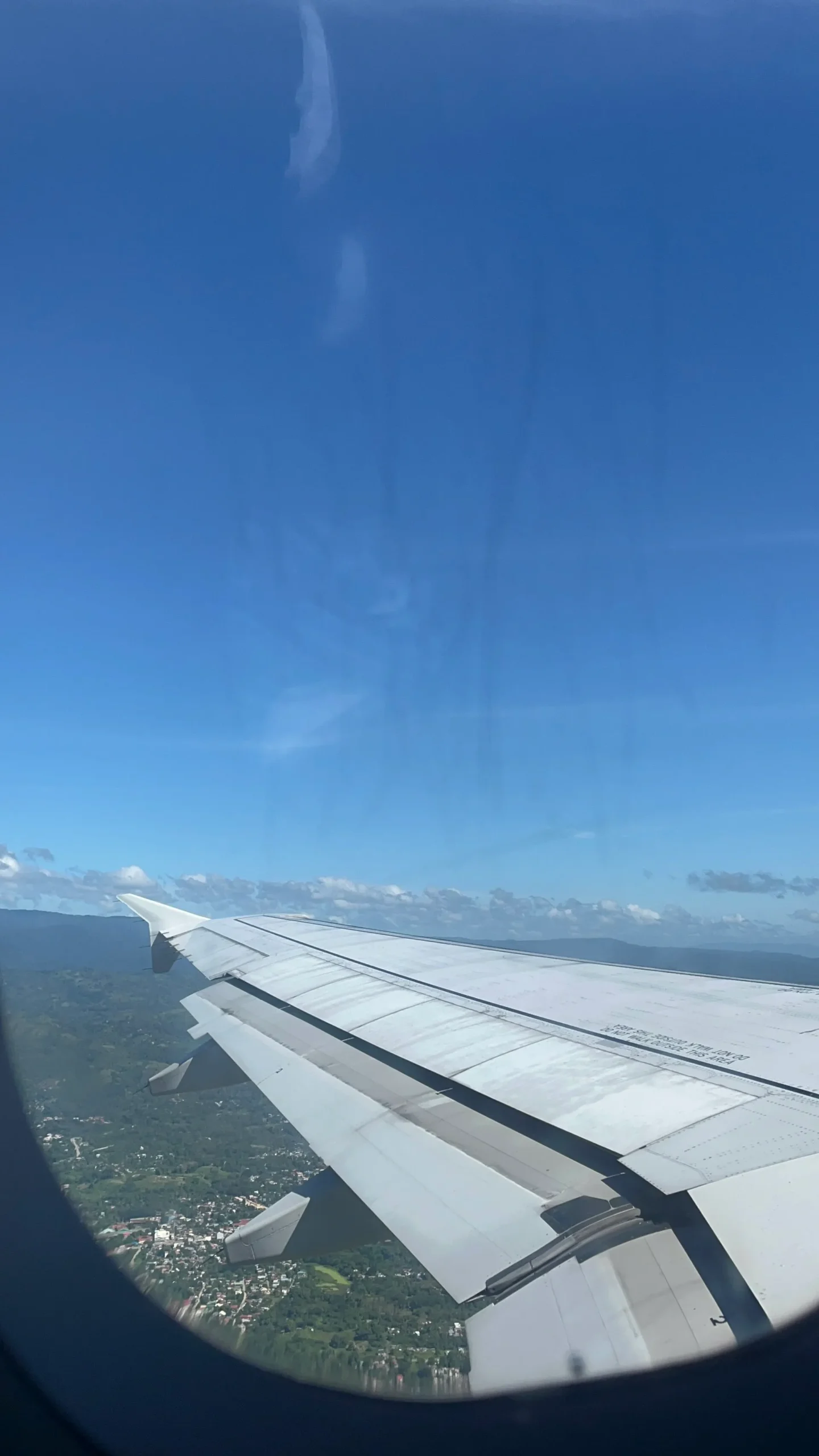
Next time you are looking out over the wing, remember that the view comes through a carefully layered piece of engineering. For anyone who loves the details of aircraft, from cabin windows to wing shapes, there is a whole world of design worth exploring, and collectors often enjoy keepsakes from places like Modelworks Direct.
Frequently Asked Questions
Is the tiny hole in an airplane window dangerous?
No. It is a planned feature that helps share the pressure load between the window layers and keeps moisture under control. It does not make the cabin leak.
Do all airliners have the bleed hole?
It is common across passenger jets, though the exact window design can vary between aircraft types and manufacturers. If you are curious about a specific plane, the airline or manufacturer is the best source.
Why does the window sometimes look frosty around the hole?
Cold air and moisture can show up as a small patch of mist or frost around the opening on some flights. It is generally considered normal and not a sign of a problem.
Final Thoughts
That tiny dot at the bottom of your window is a small piece of everyday engineering: part pressure manager, part safety net, part fog fighter. Once you know what it does, flying feels a little less mysterious and a lot more reassuring. So the next time you take the window seat, give the little hole a nod. It is quietly looking after you all the way to your destination.