
There was a time when getting access to an airport lounge felt like being let through a door most people didn’t know existed. Quieter air. A proper drink. Somewhere to sit that wasn’t a plastic chair bolted to a row of fourteen others. The sense that flying — even the waiting part — could be something other than endurance.
That feeling has become harder to find. Not impossible. But noticeably harder.
What Happened
The short version: too many people, not enough thought about what made these spaces worth protecting.
Lounge access has been democratized dramatically over the last decade, which sounds positive in principle. Credit card tie-ins, Priority Pass memberships, status matches, day passes sold at the gate — the result is that spaces designed for a few hundred passengers a day now handle multiples of that. The concept of the lounge as sanctuary quietly broke under the volume.
Walk into a busy Priority Pass lounge at a mid-sized European hub on a Friday afternoon and the atmosphere isn’t all that different from the terminal you just left. The seats are slightly better. The noise level is the same. The food — mass-catered to handle unpredictable crowd sizes — has the quality of an airport café that’s trying too hard and succeeding at neither.
Airlines and lounge operators saw footfall numbers going up and made the mistake of reading that as success.
The Food Problem, Specifically
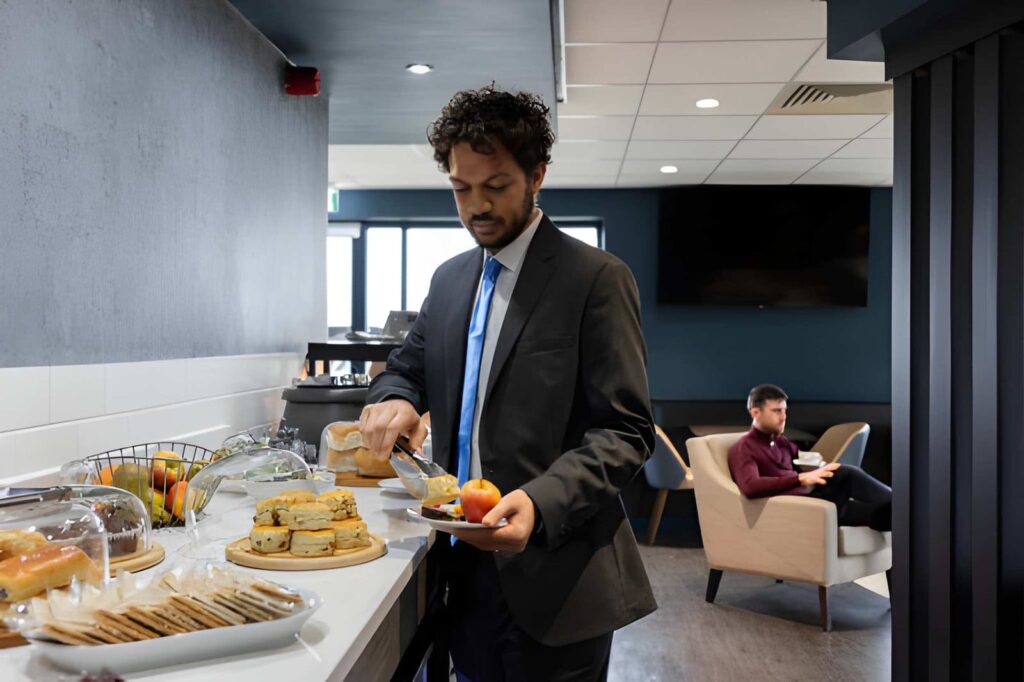
Food is where the decline shows most clearly, because it’s where the gap between aspiration and delivery is hardest to hide.
The better lounges of the 1990s and early 2000s — and the genuinely great ones still operating today — treated catering as part of the experience, not a logistics problem to solve cheaply. A proper bar. Dishes requiring actual kitchen time. The kind of meal that made a two-hour layover feel like something other than dead time.
What replaced it in most mid-tier lounges is a buffet engineered for volume: wraps that have been sitting under a heat lamp since before your flight landed, pasta that’s resigned itself to its fate, a dessert station that suggests someone once read about hospitality without fully understanding it.
The lounges that still earn genuine loyalty tend to source locally, change their menus seasonally, and run a kitchen that makes real decisions rather than simply reheating what arrived on a supplier’s truck. That costs more. Most operators decided it wasn’t worth it. The ones that disagreed are the ones people still talk about.
The Lounges That Kept the Standard
A handful of airport lounges have managed to preserve what the category promised and mostly stopped delivering.
Cathay Pacific The Pier — Hong Kong International
Still one of the most referenced lounge experiences in aviation, and not without reason. Individual dining areas, a proper noodle bar, private shower suites that genuinely feel private. It hasn’t chased volume the way most have, and the restraint shows in every corner of the experience.
Singapore Airlines SilverKris — Changi T3
Changi’s terminal infrastructure makes everything easier, but the SilverKris earns its reputation independently. Food quality is consistent in a way that most airline lounges manage for about six months before cutting corners. The bar programme is taken seriously. The space doesn’t feel like it’s apologizing for existing.
Air France Salon La Première — Charles de Gaulle
The French have a cultural stubbornness about meals being non-negotiable, and the La Première lounge benefits from that. The à la carte dining operates closer to a restaurant than a holding area. Exclusively for La Première passengers — which keeps numbers manageable and the experience intact.
Qatar Airways Al Mourjan Business Lounge — Doha Hamad International
Scale done properly, which is rare. The Al Mourjan accommodates thousands of passengers daily and still avoids feeling like a transit camp. The kitchen operation is serious. The architecture gives the space room to breathe. It’s proof that size doesn’t have to mean sacrifice, though it requires genuine investment rather than just square footage.
What the Good Ones Have in Common
None of the lounges on that shortlist got there by accident.
They share a few things the forgettable ones quietly abandoned. Staff who are actually present rather than just physically there. Food that involves a kitchen making decisions rather than a supplier delivering trays. Design conceived around how a tired traveler actually feels, not around how many seats can fit a floor plan.
And perhaps most importantly: a relationship with their guests that stays direct — no layers of outsourced catering, contracted cleaning crews on minimum effort, or brand guidelines that replaced every local instinct with a corporate template. The best lounges feel like they know who they’re for. The worst feel like they could be anywhere, for anyone, and are optimized for neither.
That quality — knowing exactly who you’re serving and refusing to water it down — is rarer than it should be in any hospitality setting. In airport lounges, it’s become genuinely unusual.
The Honest State of It
Most airport lounges in 2026 are fine. Not embarrassing, not transformative — fine. They’ll get you a mediocre glass of wine and somewhere quieter to sit, and on a bad travel day that’s genuinely worth something.
But the version of the lounge that felt like a real reward — for the miles logged, the early alarms, the back-to-back connections — that version now lives in a much shorter list than it used to.
The ones still delivering it deserve to be sought out. And the rest deserve the honest feedback that fine is not the same as good.
7. Suggested FAQs
Q: Which airport lounges are consistently rated best in the world?
Cathay Pacific The Pier at Hong Kong International, Singapore Airlines SilverKris at Changi, and Qatar Airways’ Al Mourjan Business Lounge in Doha are consistently among the highest rated, combining strong food programmes with genuine investment in the passenger experience.
Q: Why are so many airport lounges crowded now?
The rapid expansion of credit card lounge access programmes — particularly Priority Pass — dramatically increased foot traffic in lounges that weren’t designed to handle that volume. Most operators haven’t invested proportionally in space or staffing to match increased access.
Q: Do airline lounges serve better food than airport restaurants?
It varies widely. Premium airline lounges at major hubs often offer food quality that rivals good restaurants. Mid-tier and credit card access lounges frequently offer buffet-style catering closer to airport food court quality.
Q: Is Priority Pass still worth it for lounge access?
For travelers who value a quieter space and basic amenities, Priority Pass remains useful. For travelers seeking a premium food or hospitality experience specifically, lounge quality varies too much to rely on the pass alone — researching specific lounges at your departure airport beforehand helps significantly.