Ask most people what aviation actually is, and you’ll get some version of “flying planes.” Pilots, airports, maybe a vague mental image of a jet engine. What rarely comes up is the fact that every single aircraft in the sky right now exists because someone, somewhere, signed off on its airworthiness with their own hands and their own name.
That someone is an aviation maintenance technician — or, in the language most people actually use, an aircraft mechanic. And it’s one of the more misunderstood corners of the industry.
It’s Not Just Turning Wrenches
There’s a tendency to picture aircraft maintenance as something closer to car repair with bigger tools. It isn’t, not really. A licensed aviation mechanic in the US holds an FAA Airframe and Powerplant certification — an A&P, in industry shorthand — which legally authorizes them to inspect, maintain, and approve aircraft for return to service. That’s a serious amount of responsibility resting on one signature.
The actual day-to-day work spans an enormous range. Some mechanics specialize in airframes — the structural skeleton of the aircraft, the skin, the control surfaces. Others go deep into powerplants, meaning engines, fuel systems, the parts that actually generate thrust. Larger operations split things further still: avionics specialists handle the increasingly complex electronics that modern aircraft depend on, which is its own demanding discipline entirely.
None of it is glamorous in the Instagram sense. It’s early mornings, cold hangars, checklists that leave zero room for shortcuts. But there’s a quiet pride that runs through the profession — the kind that comes from knowing your work is the reason 200 people land safely tonight.
So, What Does It Actually Pay?
Here’s where most general career articles get vague. Real numbers help.
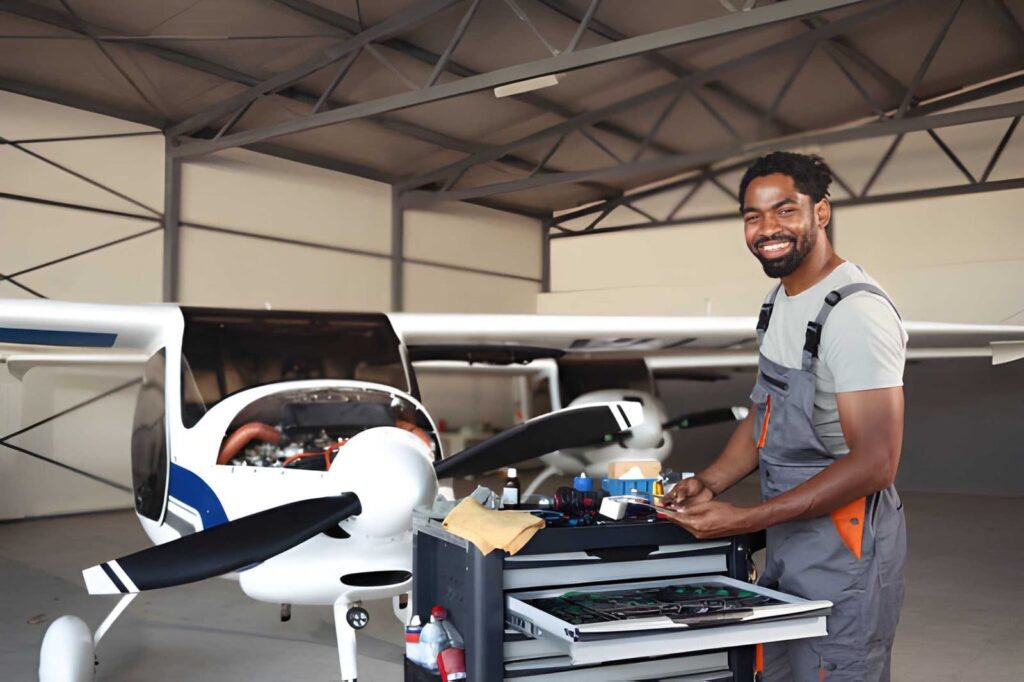
In the United States, aviation mechanics — officially classified as Aircraft and Avionics Equipment Mechanics and Technicians — typically earn in a range that climbs meaningfully with experience and specialization. Entry-level mechanics, fresh out of an FAA-approved A&P program, tend to start lower, often in the $45,000–$55,000 range depending on region and employer. Mechanics working for major airlines or specialized MRO (Maintenance, Repair, and Overhaul) facilities, particularly those with avionics certification or experience on specific aircraft types, regularly move well past $80,000–$90,000, with senior technicians and inspectors at major carriers reaching into six figures.
Geography matters more than people expect. Mechanics working near major hub airports — Atlanta, Dallas, Chicago — typically see higher pay than those at smaller regional operations, simply due to demand and cost of living. Union representation, common at major airlines, also tends to push wages and benefits higher than non-union shops.
The Path In Isn’t As Long As You’d Think
Unlike a lot of technical careers, becoming an aviation mechanic doesn’t require a four-year degree. Most people go through an FAA-approved Aviation Maintenance Technician school — typically 18 to 24 months — and come out eligible to sit for A&P certification exams. Some come up through military aviation maintenance instead, which transfers surprisingly well into civilian certification.
It’s one of the more accessible entry points into commercial aviation, honestly. No flight hours to log, no enormous upfront cost compared to pilot training, and demand has stayed consistently strong as the existing maintenance workforce ages out faster than new technicians are entering.
A Career That Tends to Stick With You
Talk to enough veteran mechanics and a pattern emerges — most of them never really leave the industry mentally, even after retirement. It’s common to find retired A&P techs who keep their hands in aviation through restoration projects, volunteering at aviation museums, or building meticulously accurate models of aircraft they personally worked on over the decades.
Some go as far as commissioning a detailed aviation collectible replicating a specific tail number from their career — a strange, quiet way of holding onto something that mattered.
That kind of attachment says something the salary numbers can’t. This isn’t a job people fall into and forget. It tends to follow people home.
Frequently Asked Questions
How long does it take to become an aviation mechanic?
Most FAA-approved Aviation Maintenance Technician programs take 18 to 24 months to complete, after which graduates are eligible to sit for A&P certification exams.
Do aviation mechanics need a college degree?
No. A four-year degree isn’t required. Certification through an FAA-approved program or qualifying military maintenance experience is the standard path.
What’s the difference between an A&P mechanic and an avionics technician?
A&P (Airframe and Powerplant) mechanics handle structural and engine systems, while avionics technicians specialize in the aircraft’s electronic systems, including navigation, communication, and increasingly complex digital flight systems. Some technicians hold certifications across both areas.
Is aviation maintenance a stable career path?
Yes, generally. The industry has faced a persistent technician shortage as experienced mechanics retire faster than new ones are certified, which has kept demand — and wages — relatively strong.