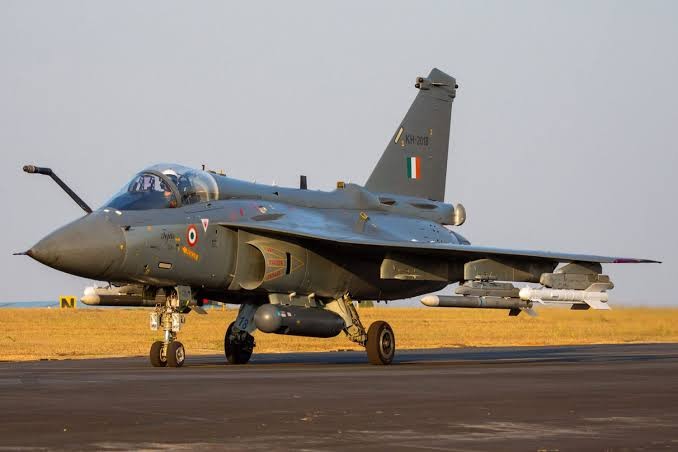
Few defence programmes capture a nation’s ambition the way the Tejas fighter jet captures India’s. Born out of a decades-long effort to build a fighter aircraft entirely within the country, this single-engine, lightweight combat platform has grown from a modest research project into a symbol of India’s push toward self-reliance in defence manufacturing. Designed and built by Hindustan Aeronautics Limited alongside the Aeronautical Development Agency, the aircraft was conceived to eventually replace the ageing MiG-21 fleet that had served the Indian Air Force for generations. Today, the Tejas fighter jet occupies a central place in conversations about India’s aerospace future, its export ambitions, and the practical challenges of building complex military hardware domestically rather than depending on foreign suppliers.
The Origins of a Homegrown Fighter
The idea behind the Tejas fighter jet took shape in the 1980s, when Indian defence planners recognized the need for a replacement for the Soviet-era MiG-21, an aircraft that had grown increasingly outdated and accident-prone. What followed was one of the longest gestation periods in modern fighter jet development, stretching across changing governments, shifting budgets, and evolving technological requirements. Instead of importing a ready-made fighter, India chose the harder path of designing one from scratch, betting on domestic engineering talent to eventually reduce dependency on foreign arms suppliers.
That decision came with significant delays. Early deadlines set for the 1990s slipped repeatedly, and it took years of testing before the aircraft received operational clearance. Despite the setbacks, the programme persisted, gradually building the technical foundation, testing infrastructure, and manufacturing ecosystem that continues to support India’s fighter jet ambitions today.
Design Philosophy and Core Specifications
The Tejas fighter jet was engineered as a lightweight, highly maneuverable, multi-role combat aircraft suited for both air defence and ground attack missions. Its compact tailless-delta configuration reduces radar signature and improves agility in close combat, while its relaxed static stability design, managed through fly-by-wire flight controls, allows pilots to execute sharper turns than older-generation aircraft could manage. The airframe relies heavily on composite materials, which cut down overall weight and contribute to better fuel efficiency and payload capacity.
Powered by variants of the General Electric F404 and later the more powerful F414 engine, the aircraft is capable of supersonic speeds and can be configured for air superiority, maritime strike, and reconnaissance roles. Its glass cockpit, multi-mode radar, and modern avionics suite were designed to bring the aircraft closer to the standards expected of a 4.5-generation fighter, even though critics have periodically questioned how closely the finished product matches these original design ambitions.
Variants Built for Different Roles
Rather than existing as a single airframe, the Tejas fighter jet programme has branched into multiple variants tailored for specific operational needs. Each version reflects lessons learned from earlier testing phases and mission requirements identified by the Indian Air Force and Navy.
- The Mk1 single-seat variant forms the backbone of current Air Force squadrons, used primarily for air defence and training.
- The Mk1A introduces improved radar, electronic warfare systems, and air-to-air refuelling capability, aimed at closing gaps identified in earlier production batches.
- A twin-seat trainer version allows pilots to transition safely onto the platform before flying solo missions.
- A naval variant, adapted for carrier operations, was developed to test whether the airframe could handle the added stress of arrested landings.
This variant-based approach has allowed the programme to mature incrementally, addressing weaknesses without restarting development from zero each time a new requirement emerges.
Manufacturing Scale-Up and Localization Efforts
One of the most closely watched aspects of the Tejas fighter jet programme has been its manufacturing capacity. For years, production remained limited to a handful of aircraft annually, a pace widely seen as insufficient given the scale of orders placed by the Indian Air Force. To address this bottleneck, Hindustan Aeronautics Limited has expanded production across multiple facilities, including newer lines established outside its traditional Bengaluru base, aimed at nearly doubling annual output.
Localization remains an ongoing challenge. While official figures have cited indigenous content levels well above half, independent assessments have periodically flagged a gap between claimed and actual domestic component sourcing, particularly given the aircraft’s continued reliance on imported engines and certain avionics systems. Efforts to develop an indigenous engine stalled years ago, leaving the programme dependent on American engine suppliers, a dependency that has occasionally caused delivery delays and raised questions about long-term supply chain resilience for India’s fighter jet ambitions.
Operational Challenges and Safety Scrutiny
Like most fighter aircraft programmes, the Tejas fighter jet has faced its share of operational setbacks. A series of accidents involving the aircraft, including incidents during training sorties and at international air displays, prompted temporary grounding of the fleet while investigators traced root causes. In several cases, technical reviews pointed toward software-related faults in onboard systems rather than fundamental structural weaknesses, and corrective updates were subsequently developed, tested, and rolled out before flight operations resumed.
Independent audits have also highlighted areas requiring improvement, including concerns about the aircraft’s weight relative to its original design targets, limited space for self-protection electronic warfare equipment, and questions around cockpit and fuel system protection. These findings have not derailed the programme, but they have added pressure on planners and manufacturers to accelerate fixes while maintaining production momentum and export credibility.
The Road Ahead: Tejas Mk2 and Beyond
Looking beyond the current generation, India is developing a larger, more capable successor known as the Tejas Mk2, classified as a medium-weight fighter rather than a light one. This next iteration features canard surfaces for improved aerodynamics, a more powerful engine, and greater range and payload capacity compared to earlier models. Developers have targeted a maiden flight during 2026, with plans for multiple prototypes to fly in subsequent years before the aircraft moves toward operational clearance later in the decade.
The Mk2 represents a deliberate attempt to close the gap between India’s current fighter capabilities and those of more advanced global competitors, while still preserving the programme’s core philosophy of indigenous design and manufacturing. If successful, it could reduce India’s reliance on imported fighter platforms even further and strengthen the export case for the broader Tejas fighter jet family in markets seeking cost-effective, multi-role combat aircraft.
Quick Overview of Key Variants
| Variant | Role | Key Feature |
|---|---|---|
| Tejas Mk1 | Air defence, training | Baseline single-seat fighter |
| Tejas Mk1A | Multi-role combat | Upgraded radar and refuelling capability |
| Trainer Version | Pilot conversion | Twin-seat configuration |
| Naval Variant | Carrier operations | Reinforced undercarriage for arrested landings |
| Tejas Mk2 | Medium-weight multi-role | Canards, stronger engine, extended range |
Strategic and Export Significance
Beyond its role within the Indian Air Force, the Tejas fighter jet has become a test case for India’s broader defence export strategy. Several countries across Asia, Africa, and Latin America have shown interest in the platform, drawn by its relatively lower acquisition and operating costs compared to Western alternatives. However, recurring safety incidents and production delays have occasionally complicated these export conversations, requiring sustained diplomatic and technical reassurance from Indian officials and manufacturers.
Domestically, the programme has also helped build a broader ecosystem of aerospace suppliers, skilled engineers, and testing infrastructure that extends well beyond the aircraft itself. Even critics of specific delays or technical shortcomings generally acknowledge that the Tejas fighter jet has meaningfully advanced India’s aerospace manufacturing base, creating capabilities that will likely benefit future indigenous defence projects regardless of how the current programme evolves.
Conclusion
The story of the Tejas fighter jet is ultimately one of persistence through complexity. What began as an ambitious attempt to replace outdated Soviet-era jets has evolved into a multi-decade national project touching engineering, manufacturing policy, and strategic autonomy. The aircraft has faced genuine setbacks, from production delays to safety concerns, and it continues to depend on foreign-sourced engines despite years of localization efforts. Yet it has also delivered something harder to quantify: a demonstrated capacity for India to design, test, and manufacture a modern fighter aircraft largely on its own terms. As the Mk2 variant approaches its first flight and production lines expand to meet Air Force demand, the programme’s next few years will likely determine whether the Tejas fighter jet becomes remembered chiefly as a foundational stepping stone or matures into a genuinely competitive platform on the global stage.