
British Airways has spent much of the past decade rebuilding its reputation after years of cost-cutting criticism, and 2026 has turned into one of its more consequential years yet. The airline is simultaneously expanding its long-haul network, refreshing its technology, and navigating a turbulent cost environment shaped by fuel prices and shifting demand. For travelers deciding whether to book with British Airways, understanding these changes matters more than simply comparing ticket prices. The carrier’s identity as the United Kingdom’s flag carrier still carries weight, but the experience on board and the choices behind the scenes have shifted considerably from what loyal flyers might remember a few years ago.
This article walks through where British Airways stands today — its network growth, fleet strategy, in-flight technology, and the financial pressures shaping decisions at Heathrow and beyond. Whether you’re a frequent flyer, a leisure traveler planning a long-haul trip, or simply curious about the airline’s direction, the picture below reflects where things stand heading toward the end of 2026.
Network Expansion Continues Despite Headwinds
Even as costs rise, British Airways has kept adding destinations rather than pulling back. The airline announced a winter 2026 expansion representing roughly 9 percent growth in its long-haul network, with new service between Gatwick and Colombo launching in October 2026 on a Boeing 777, and a Heathrow-to-Melbourne route via Kuala Lumpur set to begin in January 2027 using a Boeing 787. These additions signal that British Airways still sees value in reaching underserved long-haul markets, particularly in Asia and the southern hemisphere, even while managing tighter margins elsewhere.
Short-haul growth has continued too. A new year-round daily service between Heathrow and Guernsey began in July 2026, flown on A319 and A320neo aircraft, following an earlier addition of Heathrow to Tivat in Montenegro with three weekly flights from Terminal 3. These routes may not generate headlines the way transatlantic expansion does, but they reflect a broader strategy: British Airways is trying to diversify its network so it isn’t overly dependent on any single region or route type.
Fleet Modernization Puts the A350 Center Stage
British Airways has been steadily retiring older aircraft in favor of newer, more fuel-efficient models, and the Airbus A350-1000 has become a centerpiece of that transition. British Airways operates a widebody fleet of around 131 aircraft, including 18 Airbus A350-1000s, 12 A380s, 59 Boeing 777s and 42 Boeing 787s, with the A350-1000 increasingly taking over as the flagship model as the A380 is gradually phased down. This shift matters for passengers because newer aircraft typically mean quieter cabins, better cabin pressurization, and updated seating across all classes.Spreading capacity across leisure, business and connecting markets gives British Airways more flexibility when demand shifts unexpectedly. A carrier leaning too heavily on one corridor is exposed if that market softens; a broader net of destinations cushions the impact.
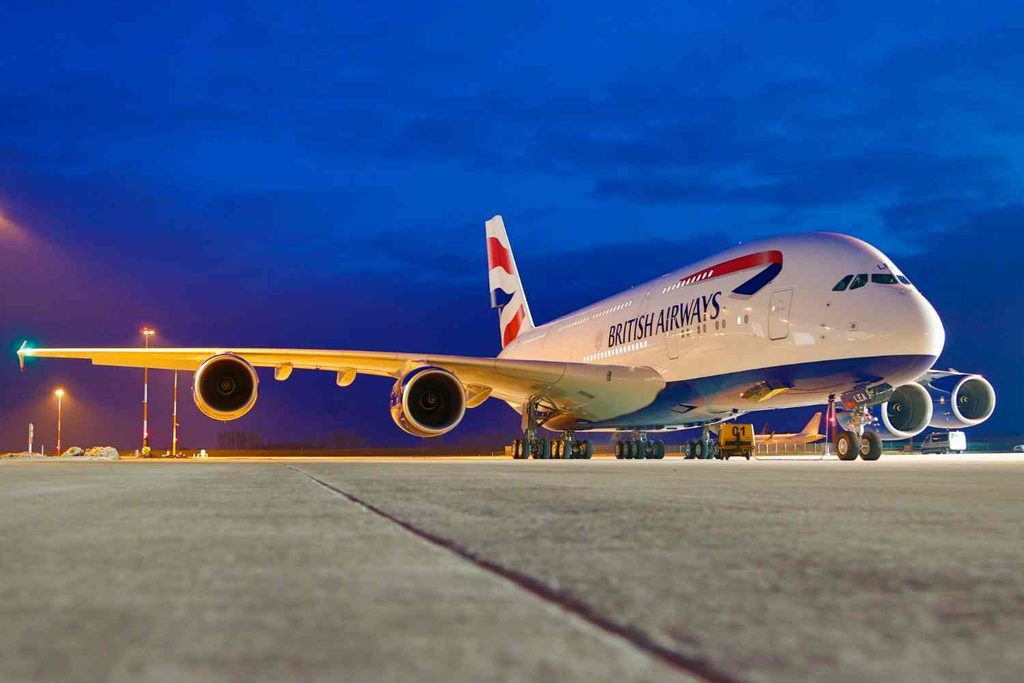
The transatlantic market has been a particular focus. Washington Dulles moved away from Airbus A380 operations toward a mix of A350-1000s, 787s and 777s after November 2025, with dozens of weekly flights and tens of thousands of seats scheduled for early 2026. This kind of aircraft reshuffling shows how British Airways is trying to match capacity to demand on specific US routes rather than applying a one-size-fits-all approach across its American network.
Here’s a snapshot of how the fleet strategy breaks down:
| Aircraft Type | Approximate Count | Primary Role in the Fleet |
|---|---|---|
| Airbus A350-1000 | 18 | Emerging flagship for long-haul and transatlantic routes |
| Airbus A380 | 12 | Being phased down gradually |
| Boeing 777 | 59 | Core long-haul workhorse across regions |
| Boeing 787 | 42 | Long-haul flexibility, including new route launches |
This table illustrates why British Airways passengers may notice more A350s on routes that once featured older 777s or the A380 — the airline is quietly repositioning its widebody assets toward aircraft with better economics and passenger comfort.
Technology Onboard: Starlink Wi-Fi and a Rebuilt App
Perhaps the most tangible change for everyday travelers has been the rollout of satellite-based Wi-Fi. British Airways became the first UK airline to fit Starlink service, with its first equipped flight departing for Houston on a Boeing 787-8, offering free Wi-Fi in every cabin with download speeds quoted above 500 Mbps, and the airline said more than 300 aircraft across its long-haul and short-haul fleets would be equipped within two years, excluding BA CityFlyer. For a carrier that had long lagged behind US competitors on connectivity, this represents a meaningful catch-up moment.
Alongside the Wi-Fi rollout, British Airways has also refreshed its digital presence. The airline began rolling out a rebuilt mobile app, available free on both iOS and Android. Improvements like these may seem minor compared to route announcements, but for frequent travelers, a smoother app experience and reliable inflight connectivity often shape day-to-day satisfaction more than headline route expansions do.
What Faster Wi-Fi Actually Changes for Flyers
- Business travelers can work through long-haul flights without losing productivity
- Streaming and video calls become realistic options rather than frustrating attempts
- Families can keep children entertained more reliably on longer routes
- The free-access model removes a cost barrier that many competitors still charge for
Financial Pressures Behind the Scenes
Route expansion and Wi-Fi upgrades tell only part of the story. British Airways operates under the umbrella of IAG, and the parent group’s recent results reveal a more complicated picture. IAG reported a second-quarter operating profit of 1.41 billion euros, down 16 percent year on year, and trimmed its full-year capacity outlook to flat growth after previously guiding for growth of under 3 percent. The group attributed the pressure to higher fuel and emissions costs, along with softer demand linked to conflict in the Middle East.
Spreading capacity across leisure, business and connecting markets gives British Airways more flexibility when demand shifts unexpectedly. A carrier leaning too heavily on one corridor is exposed if that market softens; a broader net of destinations cushions the impact.
This matters for anyone booking flights, because flat capacity growth tends to keep fares firmer rather than falling, since fewer new seats are being added to the market relative to demand. Travelers hoping for bargain fares on British Airways routes in the near term may find prices holding steadier than in a year when the airline was aggressively expanding capacity. It’s a reminder that behind every new route announcement, there’s a balancing act between growth ambitions and the realities of fuel costs, currency swings and geopolitical disruption.
Competitive Pressure From Other Carriers
British Airways isn’t operating in a vacuum. Rival airlines are actively contesting the same transatlantic and long-haul markets, which shapes how aggressively British Airways needs to move. United Airlines has announced new transatlantic routes while Air France has launched Paris-to-Las Vegas service, both developments that could affect British Airways’ share of the market. Despite this competitive pressure, early demand signals have looked encouraging, with searches for a newly announced US route reportedly surging nearly 1,000 percent on the day of announcement.
This competitive dynamic explains why British Airways continues investing in new destinations and aircraft even during a period of tighter margins. Standing still isn’t really an option when rivals are actively targeting the same premium and leisure travelers that British Airways depends on for revenue.
How Passengers Can Read These Signals
Understanding the competitive landscape helps travelers make smarter booking decisions:
- New route launches often come with introductory fares worth watching for
- Increased competition on a corridor can eventually push prices down over time
- Aircraft assigned to a route (A350 versus older 777) can indicate how much the airline is prioritizing that market
- Capacity constraints industry-wide mean booking earlier may pay off compared to waiting for last-minute deals
What This Means for Travelers Choosing British Airways
Put together, the picture of British Airways in 2026 is one of a carrier trying to modernize while operating under real financial constraints. The airline is expanding into destinations that weren’t previously well served, replacing older aircraft with more efficient models, and catching up on inflight technology that had become a competitive weakness. At the same time, the broader financial environment — driven by fuel costs and regional instability — means the airline can’t expand as freely as it might like, and fares are unlikely to soften dramatically in the short term.
For travelers, this translates into a few practical takeaways. Routes flown on newer A350s or 787s are likely to offer a noticeably better experience than older aircraft still in rotation. Wi-Fi quality has genuinely improved on equipped aircraft, making long-haul flights more bearable for anyone needing to stay connected. And because capacity growth is flat rather than expansive, booking early rather than waiting for last-minute discounts is probably the wiser strategy for the remainder of the year.
Conclusion
British Airways remains a carrier in transition — modernizing its fleet, expanding into new markets, and upgrading the passenger experience, all while managing genuine financial headwinds tied to fuel costs and global instability. None of this happens in isolation; competitive pressure from other major airlines is pushing British Airways to keep investing even when margins are tight. For passengers, the practical result is a mixed but generally improving experience: better connectivity, newer aircraft on key routes, and a network that continues to grow even in a difficult operating environment. Anyone booking a flight with British Airways in the coming months should weigh these factors carefully, since the airline flying today looks meaningfully different from the one many travelers remember from just a few years back.