Every person who has boarded a commercial flight has passed through some version of a screening checkpoint, yet few travelers stop to think about why the process looks the way it does. Airport security exists as a layered defense system, designed not to catch one specific threat but to reduce risk across many possible scenarios at once. Metal detectors, baggage scanners, identity checks, and behavioral observation all work together rather than in isolation. This layered approach means that even if one measure fails to catch something, another is likely to. Understanding this logic can make the entire experience feel less like an arbitrary inconvenience and more like a coordinated system built around probability, redundancy, and constant adaptation to new threats.
How Screening Procedures Have Evolved Over Time
The checkpoints travelers walk through today look nothing like those from three decades ago. Early screening relied almost entirely on simple metal detectors and visual bag checks conducted by airline staff rather than dedicated agencies. Major incidents involving aviation forced governments worldwide to rethink their approach, leading to the creation of specialized federal bodies tasked solely with protecting air travel. Over time, screening shifted from a reactive model, responding after threats emerged, to a proactive one that anticipates new methods of concealment. Liquid restrictions, shoe removal policies, and enhanced identification requirements all trace back to specific incidents that exposed gaps in earlier systems. This constant evolution shows that airport security is never a finished product but an ongoing process of adjustment.
The Technology Powering Modern Checkpoints
Advanced imaging systems have replaced many older tools, allowing screeners to see through clothing and luggage without physical contact in most cases. Computed tomography scanners, similar to medical CT machines, now generate three-dimensional images of carry-on bags, making it easier to identify prohibited items without requiring passengers to remove laptops or liquids separately. Explosive trace detection swabs check for microscopic residue on hands, luggage, or electronics. Facial recognition and automated identity verification are increasingly replacing manual document checks at major hubs. These tools speed up processing while improving detection accuracy, though they also raise ongoing questions about privacy, data storage, and how long biometric information should be retained by government or airport authorities.
What Happens Step by Step at the Checkpoint
Most travelers experience the same general sequence, even though specific procedures vary slightly by country and airport size.
- Identity and boarding pass verification, often now automated through document scanners
- Removal of laptops, liquids, and sometimes shoes or belts, depending on local rules
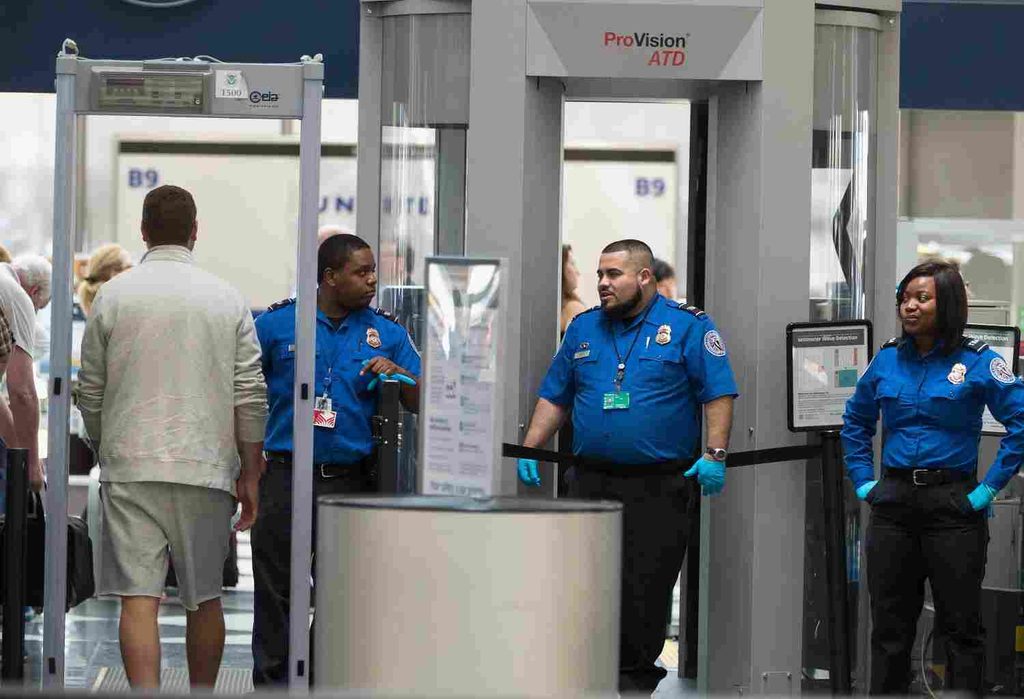
- Walking through a body scanner or metal detector
- Carry-on bags passing through an X-ray or CT scanning machine
- Secondary screening for random selection or triggered alarms, which may include a pat-down
Each stage is designed to complete quickly for the majority of travelers while still allowing officers to slow down and investigate anomalies. The randomness built into secondary screening is intentional, preventing anyone from predicting exactly who will be pulled aside and reducing the chance that a bad actor can reliably game the system.
Common Items That Cause Delays at the Checkpoint
A significant portion of checkpoint slowdowns comes from a small set of predictable mistakes. Liquids over the allowed volume, forgotten electronics buried deep in a bag, and metal objects left in pockets account for a large share of secondary screenings. Certain foods, particularly dense or gel-like items, can also trigger alarms because they resemble prohibited substances on scanner imaging. Sporting equipment, tools, and oversized power banks frequently require additional inspection as well. Frequent flyers often learn to pack strategically, placing electronics near the top of a bag and consolidating liquids into a single clear pouch. These small habits, while minor individually, collectively reduce congestion and keep the entire line moving more efficiently for everyone behind them.
Common Screening Triggers and How to Avoid Them
| Item or Behavior | Why It Triggers Screening | How to Avoid Delay |
|---|---|---|
| Liquids over 100ml | Resembles restricted volume rules | Use travel-size containers |
| Buried laptops | Blocks clear imaging of bag contents | Pack near the top of carry-on |
| Metal jewelry or belts | Sets off metal detectors | Remove before entering scanner |
| Dense food items | Mimics explosive material density | Separate into clear packaging |
| Large power banks | Battery capacity flags for review | Keep within carrier limits |
| Random selection | Statistical sampling process | No action needed, stay calm |
The Role of Human Judgment Alongside Machines
Despite heavy reliance on scanners and sensors, human observation remains central to how airport security actually functions. Trained officers watch for behavioral cues, inconsistencies in stated travel plans, or signs of distress that machines cannot detect. Programs built around behavioral detection have expanded in many countries, placing specially trained staff throughout terminals rather than only at checkpoints. Critics argue that behavior-based screening can introduce bias, while supporters point to cases where it identified threats that technology alone missed. This tension between automated efficiency and human intuition is unlikely to disappear soon, since neither approach alone catches everything that a combined system can identify. Balancing both remains one of the harder ongoing challenges in aviation safety.
International Differences in Security Standards
Travelers who fly frequently across borders quickly notice that no single global standard governs every checkpoint. Some countries require full-body scans for nearly all passengers, while others rely more heavily on metal detectors paired with random searches. Certain airports separate departing and arriving passengers with far more physical barriers than others. These differences stem from varying risk assessments, available funding, and national regulations rather than any agreed international rulebook. Organizations like the International Civil Aviation Organization set baseline recommendations, but individual countries retain significant authority to add stricter measures. This patchwork explains why the same traveler might experience a fast, relaxed checkpoint in one country and a much more thorough process in another, even on a similar-length flight.
Privacy Concerns Raised by Modern Screening
As screening technology has become more sophisticated, concerns about personal privacy have grown alongside it. Full-body scanners once produced detailed images of individual travelers before software updates replaced these with generic outlines to reduce intrusiveness. Facial recognition systems, now used for identity checks at many major airports, store biometric data that some privacy advocates worry could be misused or breached. Questions also surround how long agencies retain scanned images, fingerprints, or travel history, and who has access to that information. Airport security agencies generally argue these measures are proportionate to the risks involved, but the debate over where reasonable safety measures end and unnecessary surveillance begins continues to shape policy discussions in many countries.
Tips for a Smoother Screening Experience
Frequent travelers tend to develop small habits that consistently save time and reduce stress at checkpoints. Arriving with identification and boarding passes already accessible avoids fumbling at the document check stage. Wearing slip-on shoes and minimal metal accessories reduces the number of items needing removal. Packing liquids in a single, easily reachable pouch prevents last-minute bag searches. Enrolling in trusted traveler programs, where available, can significantly shorten wait times through expedited lanes. Staying calm and cooperative during secondary screening, even when it feels unnecessary, generally resolves the situation faster than visible frustration. These habits do not eliminate airport security procedures, but they make the process noticeably smoother for both the traveler and everyone else in line.
The Future Direction of Airport Screening
Emerging technology suggests checkpoints will continue shifting toward faster, less physically invasive methods. Contactless screening, improved algorithms for detecting concealed items, and expanded automation at identity checks are already being piloted in several major airports. Some proposals aim to eliminate the need to remove shoes, belts, or laptops entirely as scanning accuracy improves. Artificial intelligence is increasingly used to flag anomalies in scanned images faster than human review alone, reducing bottlenecks during peak travel periods. While these advances promise shorter wait times, they also require ongoing public trust regarding data use and system reliability. The next decade will likely bring checkpoints that feel faster and less intrusive, even as the underlying screening remains just as thorough.
Conclusion
Airport security touches nearly every air traveler, yet its inner workings often go unnoticed beyond the inconvenience of removing shoes or repacking a bag. Behind that routine sits a constantly evolving system built on layered defenses, advancing technology, and human judgment working together to manage risk. From the early days of simple metal detectors to today’s CT scanners and biometric checks, the process has transformed dramatically while pursuing the same fundamental goal of safe travel. Understanding how and why these procedures work can turn a frustrating wait into a more informed, even reassuring, part of the journey. As technology continues advancing, airport security will keep adapting, aiming to make checkpoints faster without ever compromising the safety they are ultimately designed to protect.