
Passengers rarely think about what happens outside the terminal windows before takeoff. Yet every departure depends on a coordinated effort from an airport ground crew working against tight schedules and unpredictable weather. These teams handle everything from loading luggage to guiding aircraft into position, and their timing has to be nearly flawless. A single delay in their sequence can ripple through an entire day of flights. While pilots and cabin crew get most of the public attention, the airport ground crew operates largely out of sight, performing tasks that make air travel possible in the first place. Their work begins long before boarding starts and continues well after the aircraft door closes, forming a hidden rhythm that keeps the entire aviation system moving.
What Ground Crew Actually Do
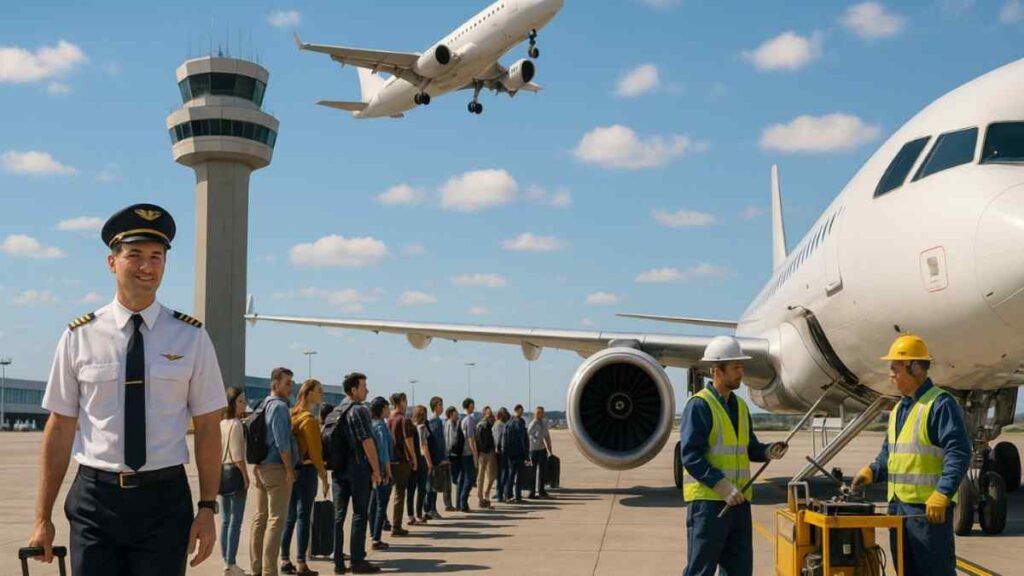
The responsibilities of an airport ground crew go far beyond what most travelers imagine. They marshal aircraft into gates using hand signals or lighted wands, connect ground power units, and operate pushback tugs that move planes without using their own engines. They also handle baggage loading, cargo weight balancing, and refueling coordination. Some members focus on cabin cleaning and catering restocking, while others inspect the tarmac for debris that could damage engines. Every one of these jobs requires precision, because aircraft turnaround time is measured in minutes, not hours. A well-trained airport ground crew can turn a plane around for its next flight in under an hour, even during the busiest travel seasons.
Training and Skills Required
Becoming part of an airport ground crew is not as simple as showing up and lifting bags. Workers undergo safety training that covers jet blast hazards, foreign object debris awareness, and communication protocols with pilots and air traffic control. Many airports require certification in equipment operation, since staff use conveyor belts, tow tractors, and de-icing trucks that demand specific licenses. Physical stamina matters too, as the job often involves standing for long shifts in extreme heat, cold, or rain. Beyond physical skill, teamwork is essential. An airport ground crew rarely works alone; instead, small groups coordinate like a pit crew, each person responsible for one task that fits into a much larger timing puzzle.
The Role of Technology in Ground Operations
Modern airports have transformed how ground teams operate. Digital tracking systems now allow supervisors to monitor baggage carts, fuel trucks, and pushback tugs in real time, reducing the guesswork that once caused delays. Handheld scanners speed up baggage sorting, while automated docking systems help pilots align aircraft more precisely at the gate. Even with these advances, human judgment remains irreplaceable. Equipment can fail, weather can shift suddenly, and only experienced staff can adapt on the spot. Airports investing in better technology still rely heavily on their airport ground crew to interpret data and respond to situations that machines cannot fully predict, especially during storms or unexpected mechanical issues.
Safety Standards That Cannot Be Ignored
Few workplaces demand the level of vigilance required on an active tarmac. Jet engines generate powerful blasts capable of injuring anyone standing too close, and moving vehicles create constant collision risks in tight spaces. Because of this, every airport ground crew follows strict protocols regarding high-visibility clothing, hearing protection, and designated walking paths. Communication is equally critical; a single misunderstood hand signal could lead to a costly or dangerous mistake. Regular safety audits, refresher courses, and incident reporting systems help maintain standards across shifts. Airlines and airport authorities treat these procedures as non-negotiable, since even a minor lapse in judgment near an aircraft can have serious consequences for both staff and passengers.
Working Under Pressure and Tight Schedules
Timing pressure defines daily life for ground staff. Flight schedules are built around turnaround windows that leave little room for error, and any hold-up, whether from weather, mechanical issues, or late passengers, forces the entire team to compress their tasks. An efficient airport ground crew adapts quickly, prioritizing which jobs must happen first, such as fueling before baggage loading, or de-icing before pushback. During peak holiday travel or severe weather events, this pressure multiplies as multiple aircraft need attention simultaneously. Supervisors often rotate staff strategically to prevent fatigue while still meeting departure windows. This constant balancing act between speed and safety is one of the most demanding aspects of the job, though rarely visible to the traveling public.
The Human Side of a Demanding Job
Working outdoors in shifting weather, often overnight or in early morning hours, takes a physical and mental toll. Many members of an airport ground crew describe the job as physically exhausting but strangely rewarding, since they take pride in keeping flights on schedule. Camaraderie develops naturally among small teams who depend on each other constantly. Veteran workers often mentor newcomers, passing down practical knowledge that formal training alone cannot teach, like reading subtle changes in engine sound or predicting how weather will affect ramp conditions. Turnover can be high in this field due to demanding hours and physically taxing conditions, yet many stay because they value being part of a system where their contribution directly affects thousands of travelers every single day.
Coordination With Airlines and Airport Authorities
No airport ground crew operates in isolation. Their work is tightly coordinated with airline dispatch teams, air traffic control, and airport management to ensure each aircraft is ready precisely when its departure slot arrives. Communication systems link ground staff with cockpit crews through radio channels, allowing real-time updates on loading progress or unexpected delays. Airport authorities also set broader policies covering noise restrictions, environmental compliance, and emergency response procedures that ground staff must follow. This layered coordination means that a single flight’s on-time departure actually reflects dozens of decisions made by different teams working together. When any link in that chain breaks down, the entire schedule for that gate, and sometimes the whole terminal, can be affected.
Why Their Work Matters More Than Ever
As global air travel continues expanding, the demand for skilled ground staff grows alongside it. Airports are handling larger aircraft, tighter schedules, and higher passenger volumes than in previous decades, which places even greater responsibility on ground operations. Efficient turnaround times directly affect airline profitability and passenger satisfaction, making the role of an airport ground crew increasingly strategic rather than purely operational. Airports that invest in proper staffing levels and training tend to experience fewer delays and better safety records overall. As aviation continues to modernize, the blend of experienced personnel and evolving technology will likely define how efficiently airports handle future growth in passenger and cargo traffic.
Conclusion
Every smooth departure and safe arrival owes something to the people working quietly on the tarmac. The airport ground crew rarely receives applause, yet their coordinated effort keeps millions of flights operating safely and on schedule each year. From marshaling aircraft to managing baggage and fuel, their tasks demand precision, physical endurance, and constant awareness of safety risks that most travelers never notice. As airports grow busier and technology continues advancing, the value of a well-trained, adaptable ground team becomes even more apparent. Recognizing their contribution offers a fuller picture of what it truly takes to get a plane off the ground and back down safely, again and again, flight after flight.