
Ask frequent long-haul travellers which aircraft they hope to see on their boarding pass, and the Boeing 787 Dreamliner comes up again and again. People do not praise it for a fancy seat or a famous airline. They say they step off feeling less drained, with fewer headaches and less of that dried-out, scratchy feeling. That is not just nostalgia. Several specific engineering choices change the air you breathe, the pressure around you and the light in your cabin, and they are worth understanding before you book your next ocean crossing.
A Quick Look at the Aircraft
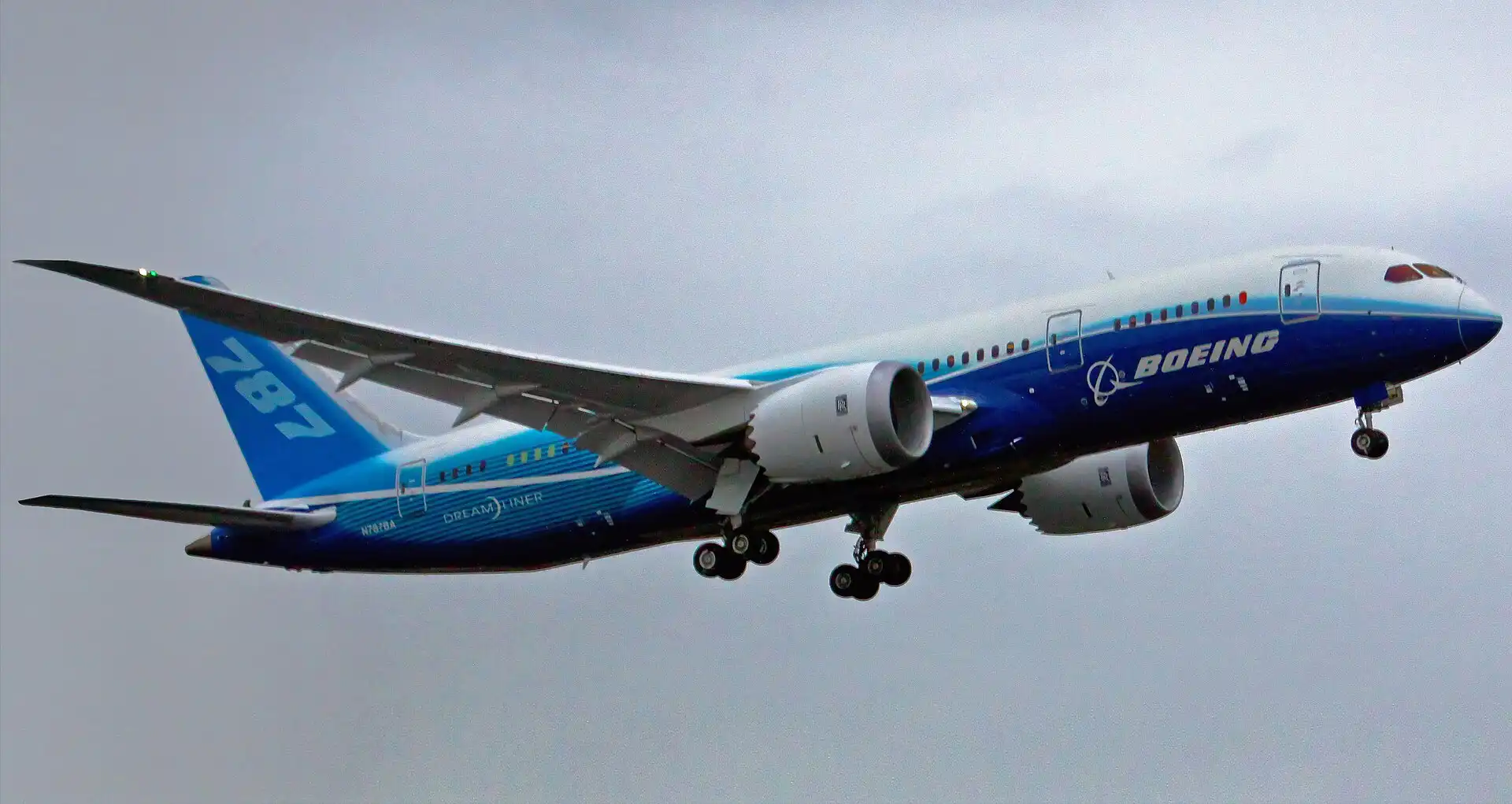
The 787 made its first flight on 15 December 2009 and entered passenger service on 26 October 2011 with launch customer All Nippon Airways. It comes in three lengths. The 787-8 measures roughly 186 feet, the 787-9 about 206 feet and the 787-10 about 224 feet, with typical seating ranging from roughly 250 on the smallest version to around 330 on the largest, depending heavily on how each airline configures its cabin. Boeing says more than 1,300 have been delivered and that the type carries around half a million passengers every day. Boeing also describes the plane as using about 25 percent less fuel than the aircraft it typically replaces, which is a big reason airlines opened so many new long, thin routes with it.
Lower Cabin Altitude: The Pressure You Do Not Notice
What cabin altitude means
When you cruise at 35,000 feet or higher, the air outside is far too thin to breathe. Aircraft pump up the cabin so that the pressure inside feels like a mountain town rather than the sky. That equivalent height is called cabin altitude. In the United States the rules cap it at 8,000 feet during normal operations, and at that height there is roughly 25 percent less oxygen available than at sea level. Many older jets sit somewhere between 6,500 and 8,000 feet in practice, depending on the aircraft and how high it flies.
What the 787 does differently
The 787 holds its cabin at about 6,000 feet, around 2,000 feet lower than the legal ceiling. That is possible because its fuselage is largely built from carbon-fibre composite materials, which Boeing says make up about half the structure by weight. Composites handle the repeated stress of pressurising and depressurising over decades better than traditional aluminium, so Boeing could set a gentler cabin without shortening the airframe’s life. Airbus uses a similar approach on its composite A350, which also targets a cabin altitude of about 6,000 feet or lower.
Does it really make you feel better?
Research points that way, with some caution. Studies of simulated flights, including work reported in the New England Journal of Medicine, found that passenger discomfort rose as cabin altitude increased and that the effect built up over time. A joint Boeing and Oklahoma State University study is also cited as finding better comfort at the lower altitude. Most of the numbers available publicly come from secondary reporting, so treat any exact percentage with care, but the direction is consistent: lower cabin altitude, easier long flights.
More Humidity in a Very Dry Place
Cruising altitude air is extremely dry, and traditional cabins end up at around 4 to 7 percent relative humidity, drier than most deserts. That is why lips crack, eyes feel gritty and throats get sore on long flights. Because composite skin does not corrode the way aluminium can, the 787 can safely run with more moisture in the cabin. Published figures vary by source. Some give settings up to about 15 percent, others suggest 15 to 25 percent, and the A350 is often quoted at around 20 percent. The honest takeaway is that it is noticeably wetter than older aircraft, but still dry compared with your living room, so water and lip balm remain your friends.
Cleaner Air Without Engine Bleed Air
On most airliners, cabin air is drawn from the engines as so-called bleed air and then cooled and mixed with recirculated air. The 787 breaks from that tradition. It pulls fresh outside air through dedicated inlets and uses electrically driven compressors to pressurise it. Boeing also adds filtration aimed at odours and contaminants. One side benefit is that the design takes roughly a third less power from the engines, which helps efficiency. Another is that it removes the engine as a pathway for the rare “fume events” some crew and passengers report on bleed-air jets. A study funded by the US aviation regulator is often summarised as finding such events on about one in 5,000 flights across the fleets it looked at, though that figure does not apply to the 787 specifically.
Big Windows That Dim Instead of Slide
A bigger view
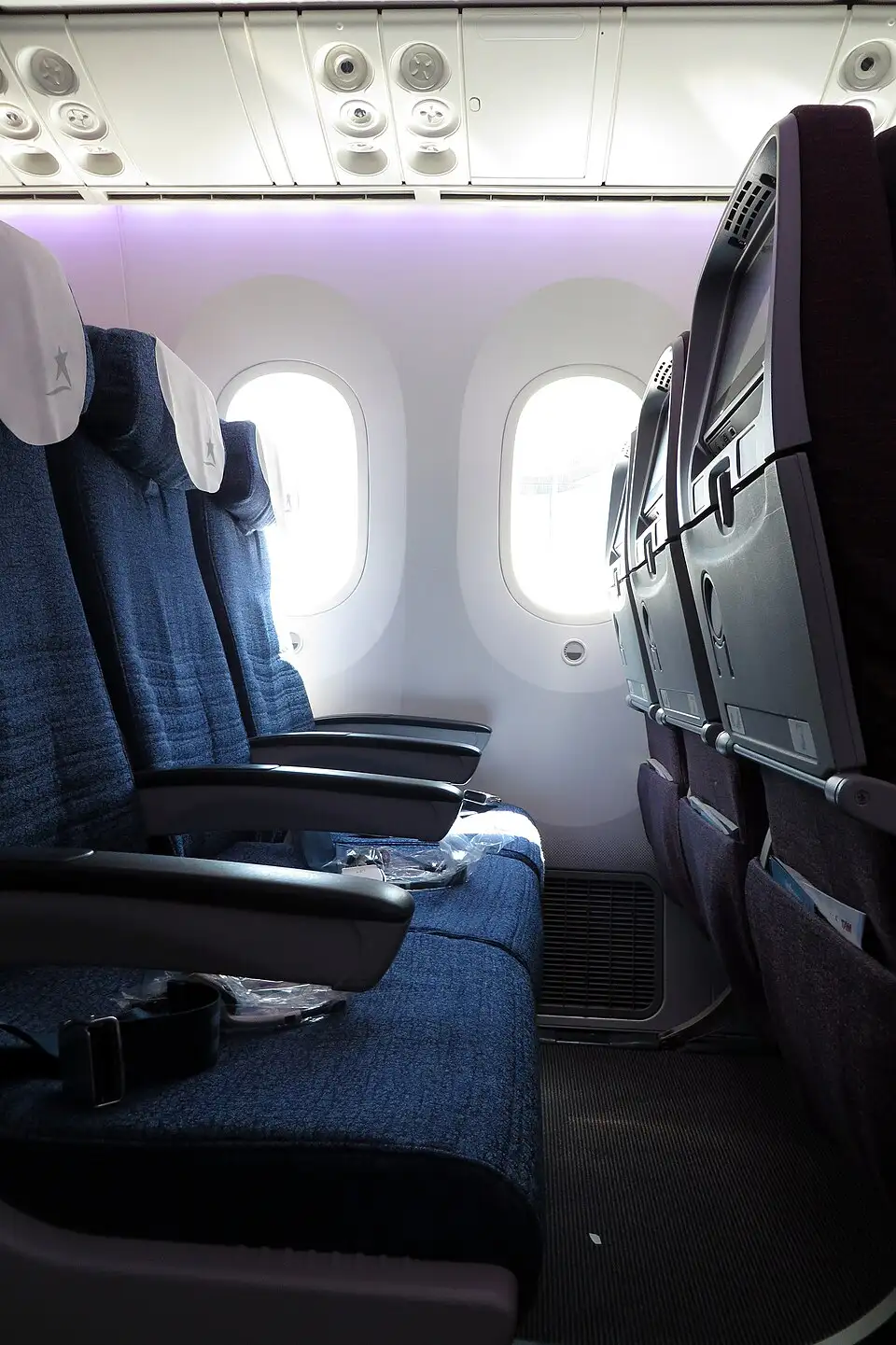
Each 787 window measures about 10.7 by 18.4 inches, among the largest on any current widebody. Even from an aisle seat, you can usually glimpse the sky, which helps with the feeling of being closed in.
No plastic shade
Instead of a pull-down shade, passengers press a button to change the glass between five levels of tint. The glass darkens electronically, so you can cut the glare without fumbling with a plastic shade. A small change, but it is one that passengers notice.
How to Use This When You Book
Check the aircraft type on the booking page or seat map before you pay. If you have a choice on a long flight, a 787 or A350 is a sensible pick, especially for overnight or ultra-long trips. Remember that the airline matters too: seat width, row spacing and service vary widely, so the aircraft improves your odds rather than guaranteeing comfort. Hydrate, move around, and still pack a moisturiser. If the engineering behind these planes fascinates you, collectors and enthusiasts can browse detailed replicas of famous airliners at Modelworks Direct.
Frequently Asked Questions
Does the 787 stop jet lag?
No. Jet lag comes from crossing time zones, not from the aircraft. The lower cabin altitude and extra humidity may leave you less tired on arrival, but your body clock still has to catch up.
Is the A350 as comfortable?
The two share the key comfort features of a composite fuselage, a cabin altitude of around 6,000 feet and higher humidity. The A350 keeps conventional bleed air, while the 787 does not.
Are all 787 cabins the same?
Not at all. The technology is shared, but each airline chooses its own seats, layout and service, so two 787 flights can feel very different.
Final Thoughts
The Dreamliner’s charm is built on details you cannot see: a gentler cabin pressure, moister air, a quieter and cleaner system and a window you can dim with a touch. None of it removes the long hours of a transoceanic journey, but together these changes take some of the sting out of them. Next time you plan a long trip, the aircraft type might deserve as much attention as the ticket price.