
India’s aviation landscape has long been dominated by metro-to-metro routes, leaving smaller towns and emerging business hubs largely disconnected from the national air network. Fly91 entered this gap with a clear purpose: to link Tier 2 and Tier 3 cities that have historically been overlooked by larger carriers. Founded by aviation veterans who understood both the operational and economic challenges of regional flying, the airline built its identity around accessibility rather than scale. Its name itself, drawn from India’s international dialing code, reflects an ambition rooted firmly in serving the country’s interior rather than chasing international expansion. This grounded approach has allowed Fly91 to carve out a niche that many larger airlines have found commercially unattractive but socially necessary.
Unlike full-scale national carriers juggling dozens of destinations and wide-body fleets, Fly91 has deliberately kept its operations lean and focused. This has enabled it to respond quickly to demand patterns in smaller markets, adjusting frequencies and routes based on actual passenger movement rather than rigid, pre-set schedules designed for metro traffic alone.
Why Regional Connectivity Matters
Regional connectivity is not simply about convenience; it is an economic lever. Towns that gain reliable air access often see faster growth in tourism, trade, and investment. Fly91 has positioned itself squarely within this narrative, aligning its operations with government-backed regional connectivity schemes that subsidize flying to underserved airports. This alignment has proven mutually beneficial: the airline gains route viability support, while the government furthers its goal of democratizing air travel beyond the usual metro corridors.
Cities like Sindhudurg, Jalgaon, and Solapur, previously reliant on lengthy road or rail journeys, now benefit from direct flight options through Fly91. For business travelers, this translates into significant time savings. For tourism operators in coastal and hill destinations, it means shorter booking-to-arrival windows for visitors who might otherwise choose more accessible locations. The airline’s role, therefore, extends beyond ticket sales into shaping how smaller Indian economies interact with the rest of the country.
Building for the Long Haul
Fly91 began commercial operations with a modest fleet of ATR 72 turboprop aircraft, a choice well suited to shorter runways and lower-traffic airports common in regional India. Turboprops offer fuel efficiency and operational flexibility that jet aircraft cannot match on shorter routes, making them the natural choice for an airline targeting smaller airports with limited infrastructure.
What began as a handful of aircraft has since evolved into a far more ambitious plan. Fly91 recently finalized one of the largest single orders placed by a regional carrier globally, committing to dozens of additional ATR 72-600 aircraft over the coming years. This expansion signals confidence not just in current demand but in the long-term trajectory of regional air travel in India. Deliveries are structured to arrive in phases, allowing the airline to scale its network gradually while maintaining operational consistency across new routes.
Key elements of this fleet expansion strategy include:
- Phased aircraft deliveries stretching across several years to match infrastructure readiness
- A target fleet size several times larger than current operations
- Continued focus on underserved airports rather than saturated metro routes
- Investment in maintenance and crew training to support scaled operations
Route Network and Passenger Experience
Fly91 has structured its network around a hub-and-spoke model anchored in Goa, using its base airport to connect passengers efficiently between smaller cities and larger metropolitan centers like Bengaluru and Hyderabad. This model allows travelers from remote locations to reach major business and leisure hubs without the multi-leg road journeys that once defined regional travel in India.
Passenger experience has been another area of deliberate investment. As a full-service regional carrier, Fly91 differentiates itself from pure low-cost models by including baggage allowances and onboard refreshments as standard offerings, rather than treating them as paid add-ons. This positioning appeals particularly to business travelers and families who value predictability over the lowest possible fare. The airline’s approach suggests a calculated bet: that regional travelers, often flying for essential rather than discretionary reasons, prioritize reliability and comfort as much as price.
Booking simplicity and on-time performance have also featured prominently in the airline’s public communications, reinforcing an image of dependability in markets where flight cancellations and delays have historically eroded consumer trust in smaller carriers.
Industry Recognition and Market Positioning
Fly91’s steady growth has not gone unnoticed within the aviation and hospitality sectors. The airline has received recognition from hospitality and travel industry bodies for its contribution to regional connectivity, an acknowledgment that extends beyond flight statistics into broader economic impact. Such recognition often matters in aviation, where public trust and brand credibility can influence booking decisions as much as fare comparisons.
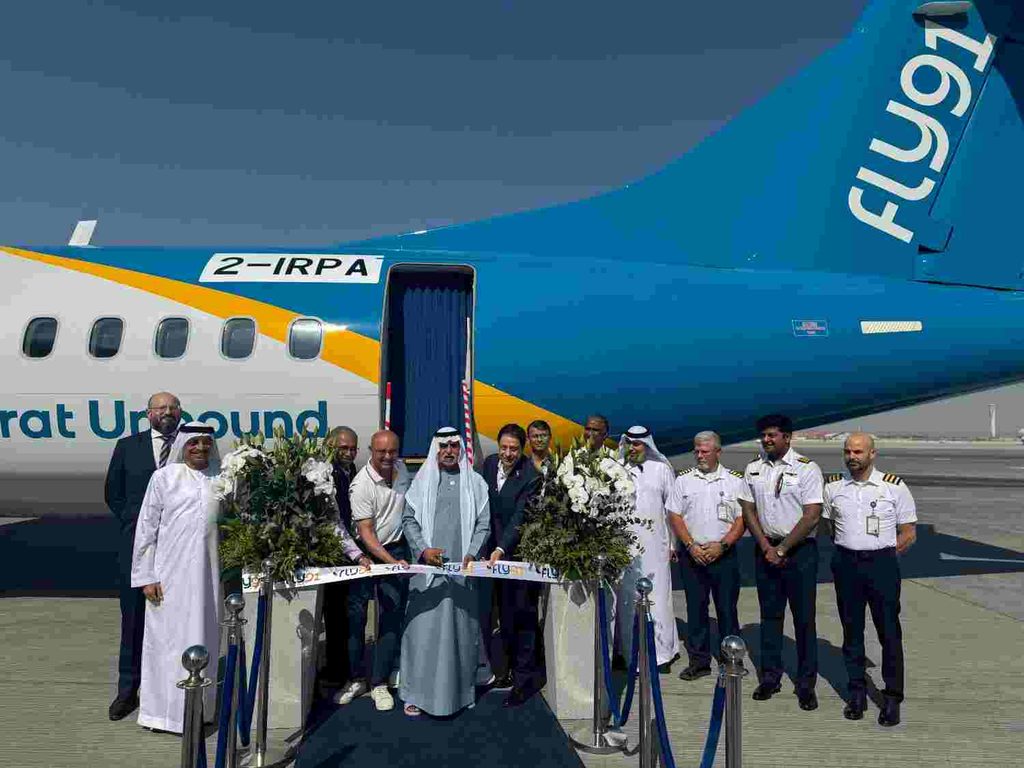
Market positioning has also played a role in how Fly91 differentiates itself from competitors. Rather than competing head-on with established low-cost carriers on high-traffic routes, the airline has focused on markets where competition is minimal or nonexistent. This strategic restraint reduces the pressure of price wars while allowing Fly91 to build loyalty in communities that genuinely lack alternatives.
The table below summarizes some of the airline’s defining operational characteristics:
| Aspect | Details |
|---|---|
| Base Airport | Manohar International Airport, Goa |
| Aircraft Type | ATR 72 turboprop family |
| Service Model | Full-service regional carrier |
| Primary Focus | Tier 2 and Tier 3 city connectivity |
| Expansion Plan | Large-scale ATR 72-600 order for future growth |
| Core Markets | Western and Southern India regional routes |
Challenges Facing Regional Carriers
Despite promising growth, Fly91 operates in a segment of Indian aviation that carries inherent risks. Regional routes often face lower and more seasonal demand compared to metro corridors, making revenue predictability harder to achieve. Smaller airports frequently lack the infrastructure, such as advanced navigation aids or extended runway lighting, that larger hubs take for granted, which can limit operational hours and reliability during adverse weather.
Fuel costs, aircraft maintenance for a growing fleet, and the need for skilled regional pilots also present ongoing operational pressures. Airlines in this space must balance the social mission of connectivity with the commercial reality of sustainable margins, a tension that has historically caused several regional carriers in India to scale back or exit the market entirely.
Fly91’s response to these challenges has been methodical rather than aggressive. By pacing its fleet growth against confirmed infrastructure and demand signals, the airline appears to be prioritizing sustainability over rapid, headline-grabbing expansion. This cautious yet ambitious approach may prove decisive in determining whether Fly91 becomes a lasting fixture in India’s aviation ecosystem rather than a short-lived experiment.
The Road Ahead for Fly91
Looking forward, Fly91’s growth trajectory appears closely tied to broader shifts in Indian infrastructure development. As more regional airports receive upgrades under national connectivity initiatives, the airline is well positioned to expand into newly viable markets without needing to build demand from scratch. This alignment between government infrastructure investment and private airline expansion creates a feedback loop that could accelerate growth for carriers like Fly91 over the next several years.
The airline’s leadership has also signaled interest in deepening its presence within existing markets before spreading too thin across new ones. This suggests a strategy focused on frequency and reliability within proven routes, building passenger habit and loyalty before chasing broader geographic coverage. Such patience is relatively uncommon in an industry often driven by rapid, publicity-heavy expansion announcements.
For travelers in India’s smaller cities, the continued growth of Fly91 represents more than just additional flight options. It signals a shift in how the aviation industry views regional India, not as a secondary market to be served only when convenient, but as a genuine growth frontier deserving dedicated investment and long-term commitment.
Conclusion
Fly91 has emerged as more than just another entrant in India’s crowded aviation sector; it represents a deliberate bet on the country’s underserved regions. By focusing on Tier 2 and Tier 3 cities, investing in a fleet suited to smaller airports, and pairing full-service comfort with a growth strategy paced against real infrastructure development, Fly91 has built a foundation distinct from typical low-cost carrier playbooks. Its recent large-scale aircraft order underscores genuine confidence in the long-term demand for regional connectivity across India. While challenges around seasonal demand and infrastructure gaps remain part of the regional aviation landscape, Fly91’s methodical expansion suggests a carrier built for endurance rather than short-term headlines. As India’s regional infrastructure continues to mature, Fly91 is well placed to play a defining role in reshaping how smaller cities connect with the rest of the nation, one flight at a time.