
Most airports don’t make you feel anything. You land, you shuffle through passport control, you wait for your bag to appear, and you leave. It’s functional. Fine. Forgettable.
But every so often you step off a plane and something shifts. The air feels different. The light through the terminal windows hits just right. And for a moment — even if you’ve never been to this place before — it feels oddly like coming home.
It doesn’t happen often. But when it does, you remember it for years.
Queenstown, New Zealand — Where the Landing IS the Destination
There are airports where the arrival experience is just logistics. And then there’s Queenstown.
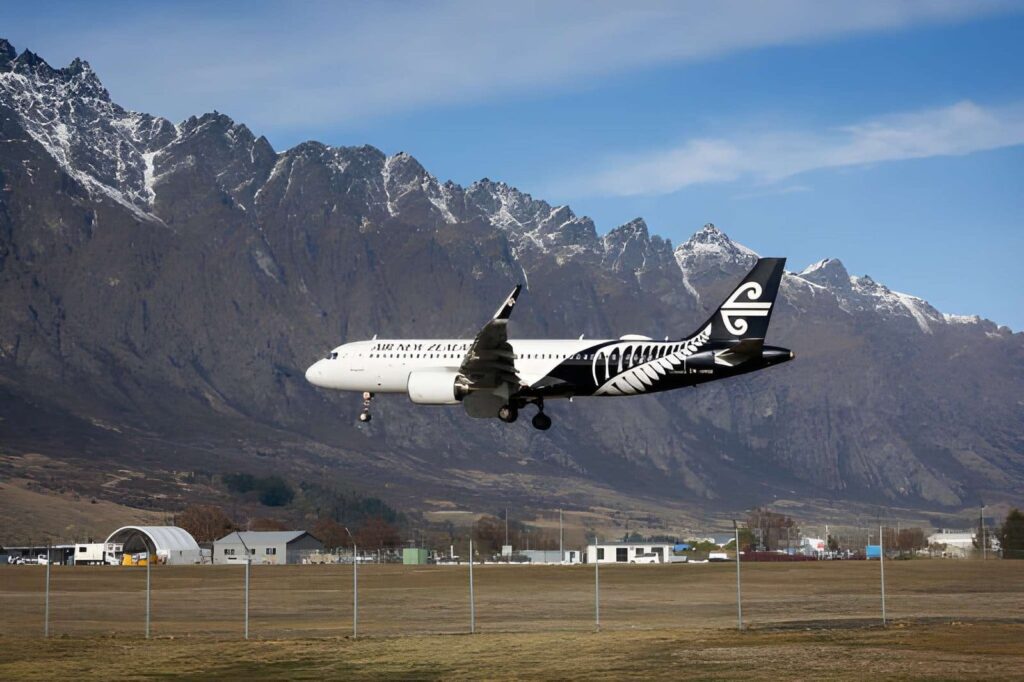
The approach into Queenstown International Airport is one of those rare descents that makes passengers stop scrolling, close their laptops, and press their faces to the window. The Remarkables mountain range fills your entire field of view. Lake Wakatipu appears below, electric blue and enormous. The aircraft threads through terrain that, from the cabin, seems impossibly close.
And then you land, walk into a terminal that’s essentially designed like a high-end ski lodge, and the mountains are right there through the glass.
The scale of it catches people off guard. This isn’t a gateway airport to somewhere else. It is the somewhere. Even first-time visitors report that strange sensation — the feeling of having arrived somewhere that already makes sense to them, as if the landscape was always waiting.
It’s small by international standards. No sprawling gates, no confusing terminal changes, no hour-long walks to baggage claim. Just those mountains, that lake, and a building that treats the view as the main event. Which is exactly as it should be.
Innsbruck, Austria — The Alps in Every Window
Innsbruck Airport sits in a valley. This sounds unremarkable until you’re landing in one.
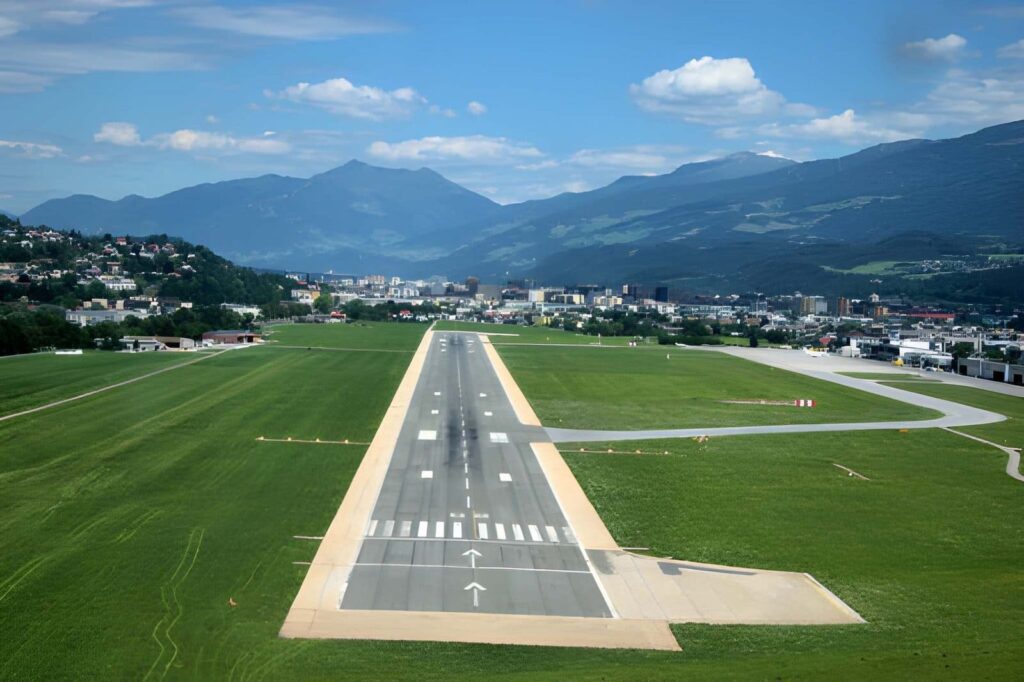
The approach requires aircraft to descend between mountain walls before banking sharply to align with the runway. It’s the kind of visual drama that never gets normal, no matter how many times you fly it. And the moment you’re on the ground, the Alps are right there — immediately, overwhelmingly present on three sides.
The terminal is modest. Straightforwardly Austrian. Wooden accents, efficient service, no pretension. But step outside and the air has that unmistakable thin mountain quality, and the peaks are close enough that you feel slightly underdressed for the occasion.
Aviation enthusiasts who have a soft spot for Innsbruck often cite the Tyrolean approach as one of Europe’s most visually memorable short-haul landings. A few of them, the kind who collect handcrafted airplane models of aircraft they’ve flown on meaningful journeys, consider certain Alpine routes among their most treasured flying memories — not because of the aircraft type or the airline, but because of that precise moment when the mountains appear through the windscreen and nowhere else in the world looks like this.
That’s what Innsbruck does. It makes the geography feel personal.
Chiang Mai, Thailand — Calm in the Middle of Everywhere
Southeast Asian airports tend toward the enormous — Bangkok’s Suvarnabhumi, Singapore’s Changi, Kuala Lumpur International. Grand, efficient, architecturally ambitious. Impressive in ways that don’t necessarily make you feel anything warm.

Chiang Mai is different.
Chiang Mai International is unhurried in a way that large airports simply cannot be. The arrivals hall is manageable. The staff move at a pace that suggests nobody is catastrophizing. Outside the doors, the heat and the scent of tropical flowers hit simultaneously, and tuk-tuks idle in a line and the mountains are visible in the distance on a clear morning.
There’s a softness to arriving here that’s hard to explain in logistical terms. The airport isn’t particularly remarkable architecturally. It doesn’t have an extraordinary approach. But something about its human scale — the fact that it exists at the pace of the city it serves — makes it feel like being let into somewhere private and relaxed, rather than processed through a transport node.
Frequent visitors to northern Thailand describe the Chiang Mai arrival as one of the most reliably grounding moments in their travel calendar. The city is ready for you before you’ve even retrieved your bag.
Bozeman Yellowstone International, Montana — The Mountain West In Miniature
American regional airports don’t often make lists like this. But Bozeman Yellowstone International — officially named Bozeman Yellowstone International, which already tells you something — has developed something of a cult following among travelers who’ve passed through it.

It’s grown considerably in recent years, but it still operates on the logic of a community airport rather than a hub. The surrounding landscape is staggering. The Bridger Range sits to the northeast, the Gallatin Range to the south, and on a winter approach the whole scene looks like a painting someone decided to make into a state.
Inside, the terminal leans into its identity rather than apologizing for it. It feels like Montana made deliberate choices about what kind of airport it wanted. That’s rarer than it sounds.
People who arrive in Bozeman for the first time — especially those coming from larger, more anonymous cities — often describe a physical relaxation that happens somewhere between landing and baggage claim. The ceiling isn’t too high. The light isn’t fluorescent. The mountains are out the window.
Home doesn’t always mean familiar. Sometimes it just means the right scale.
What These Airports Have in Common
They’re not the biggest. They don’t have the most retail options or the longest runways or the most efficient transfer connections. None of them would win an airport capacity benchmark.
What they share is something harder to engineer: an honest relationship between the airport and the place it serves. The building doesn’t pretend it could be anywhere. It couldn’t be anywhere. It’s here, specifically, and it makes that clear from the moment you land.
The airports that feel like home are the ones that don’t try to make you forget where you are.
Frequently Asked Questions
Which airports are known for the most scenic approaches in the world?
Queenstown in New Zealand, Innsbruck in Austria, Kathmandu in Nepal, and Funchal in Madeira are consistently cited among the world’s most visually dramatic landings. For a deeper look at special approach procedures, the Aircraft Owners and Pilots Association (AOPA) provides excellent resources on terrain-challenging approaches and the training required to fly them.
Why do some small airports feel more welcoming than large international hubs?
Scale plays a significant role. Smaller airports are designed around the communities they serve rather than passenger throughput targets. That human scale — shorter walks, less noise, more natural light — tends to create a calmer, more personal arrival experience.
Is Queenstown Airport safe to land at given the mountain terrain?
Yes. Queenstown operates under specific instrument approach procedures, and pilots flying into the airport receive specialized training for the terrain. Despite its dramatic appearance, it has a strong safety record.
Why does Innsbruck require a special approach procedure?
The airport sits in the Inn Valley, surrounded by Alpine terrain on multiple sides. Aircraft must follow a curved visual approach path to align correctly with the runway, which requires specific crew authorization and clear weather conditions to operate.